

The Preparation Industry for Iranian Salmon Exports Processes and Export Readiness

Abstract
Iran’s salmonid export preparation industry is evolving rapidly, driven by technological advances in packaging, processing, and quality control. This article examines the current state of Iran’s salmon preparation sector, covering packaging innovations, processing methods, quality standards, and market readiness. Key findings include the proven effectiveness of aluminum packaging in extending shelf life, the emergence of value-added products such as canned saffron-seasoned trout, and the growing export of chilled fillets to regional markets including Iraq, Kuwait, and the United Arab Emirates. The article also addresses infrastructure challenges and provides a roadmap for Iranian exporters seeking to compete in international markets.
1. Introduction: The Strategic Importance of Salmon Preparation
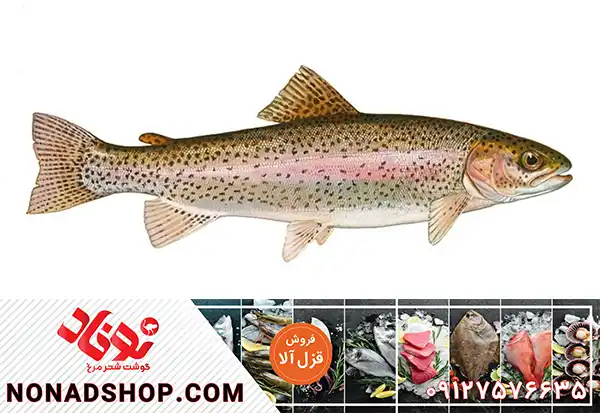
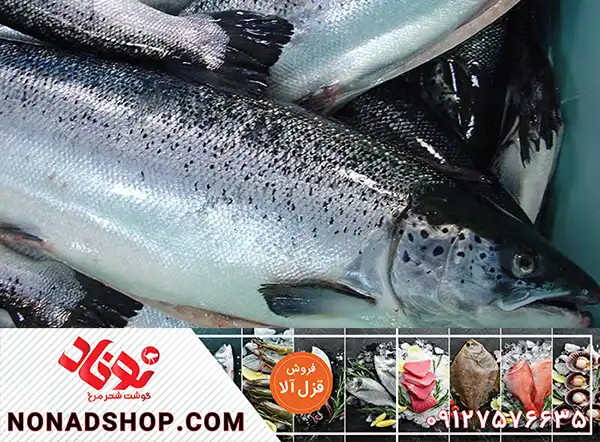
Salmon, particularly rainbow trout (*Oncorhynchus mykiss*), is one of Iran’s most important aquaculture species. As a cold-water fish, it is primarily cultivated in provinces with suitable climatic conditions, with Ardabil province emerging as a key center due to its altitude, multiple water resources, and favorable air masses . The preparation industry—encompassing processing, packaging, quality control, and preservation—plays a critical role in transforming raw salmon into export-ready products that meet international standards.
**Why Preparation Matters:**
– **Shelf Life Extension**: Fresh fish is highly perishable; proper preparation techniques can extend shelf life from days to months
– **Value Addition**: Processed products (canned, smoked, vacuum-packed) command higher prices than raw fish
– **Market Access**: International buyers require products that meet specific quality, safety, and traceability standards
– **Reduced Waste**: Advanced processing reduces post-harvest losses, which globally account for approximately 20 million tons of fish annually

2. Core Preparation Processes for Export-Grade Salmon

### 2-1. Primary Processing
The journey from farm to export begins with primary processing, which includes:
| Process Step | Description | Export Relevance |
| Slaughter & Bleeding | Humane slaughter followed by complete bleeding | Reduces discoloration and extends shelf life |
| Gutting & Cleaning | Removal of internal organs and thorough washing | Critical for microbial control |
| Filleting | Removal of bones and skin as required | Fillets are the most common export form |
| Portioning | Cutting into standardized sizes | Meets specific buyer requirements |
The Iranian Fisheries Research Organization has identified handling—both onboard and onshore—as a key area of focus, along with processing methods including freezing, canning, smoking, drying, and salting .
### 2-2. Advanced Processing Methods
**Freezing and Cold Storage**
Freezing is the most common preservation method for export salmon. According to export data, Iran exports frozen Pacific salmon products, including species such as *Oncorhynchus gorbuscha* (pink salmon), *O. keta* (chum salmon), and *O. kisutch* (coho salmon) . Proper freezing preserves quality during long-distance transport to markets across Asia.
**Canning and Value-Added Products**
Canned salmon represents a growing segment of Iran’s export preparation industry. In 2018, Iran exported fish preparations of salmon, whole or in pieces, valued at $100,930 (24,404 kg) primarily to Iraq . The canned product segment is expanding with innovative offerings.
**Innovation Spotlight: Saffron-Infused Canned Salmon**
Faradaneh Industrial Group, the largest aquatic feed producer in the Middle East, has introduced canned trout seasoned with saffron as a product innovation. According to the company’s commercial manager, adding saffron makes the product “tasty and balances the coldness of the fish,” creating a high-value product with significant foreign exchange potential . This product is packaged in portable pouches suitable for emergency conditions, military use, and athletic consumption—requiring no boiling .
**Smoking and Salting**
Smoking and salting are traditional preservation methods with growing export potential. Research on smoked Atlantic salmon has explored how salting method, time, and temperature affect quality . For rainbow trout, brine concentration and brining time are critical factors in producing high-quality smoked fillets . These products are particularly relevant for markets in Asia where smoked salmon is in demand .

Packaging Technology: A Critical Success Factor
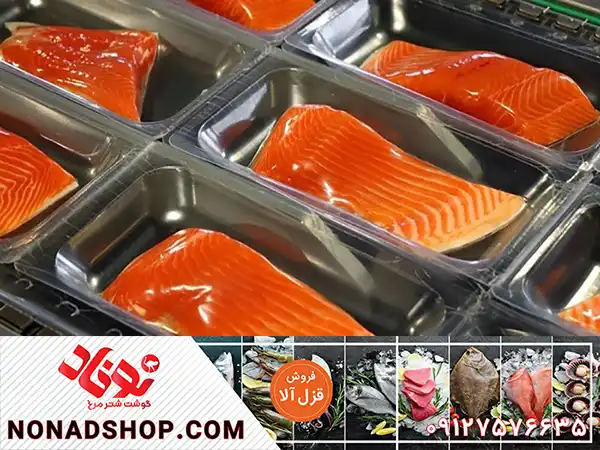
Packaging is arguably the most critical factor in salmon preparation for export. Research conducted at Islamic Azad University, North Tehran Branch, has provided compelling evidence on packaging effectiveness .
3-1. Research Findings on Packaging Performance
A 2023 study compared three packaging types for rainbow trout fillets stored at 4°C over 12 days :
| Packaging Type | Performance Summary |
| **Aluminum Containers** | Best overall performance; fillets remained consumable throughout the 12-day period; lowest microbial load (6.86 log cfu/g) |
| **Polystyrene Containers** | Moderate performance; acceptable for shorter storage |
| **Polyethylene Bags (Control)** | Unacceptable by day 12 due to quality deterioration and loss of nutritional value |
**Key Measurement Results :**
– **TVB-N (Total Volatile Basic Nitrogen)**: The control package showed the highest spoilage indicator at 24.52 mg/g
– **Microbial Load**: Aluminum packaging maintained the lowest total microbial count
– **Shelf Life**: Only aluminum-packed fillets remained within acceptable limits for all quality indicators
This research is particularly significant because it demonstrated effective preservation *without* the use of chemical preservatives or antimicrobial extracts—addressing consumer preferences for “clean label” products while maintaining economic feasibility for producers .
3-2. Packaging Options for Export
Based on available technologies and market requirements, Iranian exporters utilize:
1. **Vacuum Packaging**: Extends shelf life by removing oxygen; suitable for fresh and frozen fillets
2. **Aluminum Containers**: Provides superior protection against light, oxygen, and microbial contamination
3. **Modified Atmosphere Packaging (MAP)**: Replaces oxygen with inert gases to slow spoilage
4. **Pouch Packaging**: Lightweight, portable option for canned products
The availability of polyethylene bag production within Iran, as exemplified by Faradaneh’s integrated operations, supports the packaging supply chain .
4. Quality Control and Standards Compliance
4-1. Regulatory Framework
Iran’s salmon preparation industry operates under the oversight of the Veterinary and Fisheries Organization of Iran, which enforces standards for both domestic and export products . These standards address:
– Hygiene and sanitation
– Product composition and labeling
– Microbial limits
– Chemical residue thresholds
– Packaging integrity
### 4-2. Key Quality Indicators
Export-grade salmon must meet rigorous quality parameters, including:
| Parameter | Significance |
| TVB-N | Indicator of protein decomposition; higher values indicate spoilage |
| TBA (Thiobarbituric Acid) | Measures lipid oxidation and rancidity |
| PV (Peroxide Value) | Assesses primary oxidation products |
| Free Fatty Acids | Indicates hydrolytic rancidity |
| Total Microbial Load | Safety indicator; must remain within permissible limits |
According to published research, the permissible limits for these indicators must be maintained throughout the cold chain to ensure product acceptance in export markets .
### 4-3. Fish Feed Standards and Quality Link
Product quality begins with feed. Faradaneh’s 200,000-ton annual aquatic feed production capacity and its status as an exemplary exporter and selected standard unit demonstrate the integration of feed quality with final product quality . The company operates 75 salmon, shrimp, and tropical fish breeding farms, along with eight fish meal factories across Iran, creating a vertically integrated value chain .

Export Destinations and Market Readiness
### 5-1. Current Export Markets
Based on market analysis, Iranian salmonid products reach several key destinations:
| Product Type | Key Export Destinations |
| Fresh/Chilled Fillets | Iraq, Kuwait, United Arab Emirates |
| Frozen Products | Russia, Azerbaijan, Vietnam, Persian Gulf countries |
| Canned/Prepared Salmon | Iraq |
| Live/Carcassed/Vacuumed | Russia, Azerbaijan, Vietnam, Persian Gulf |
### 5-2. Market Trends and Growth
The Iranian tinned fish and seafood market, including salmon, is projected to grow through 2031, with export trade statistics tracked for major destination countries . Similarly, the organic fish market—including salmon in fresh/chilled, frozen/canned, and processed forms—shows growth potential .
The fresh or chilled salmonid fillet export market from Iran experienced significant growth in 2023, with shipments increasing “skyrocketed” compared to the previous year . The most notable growth in exports was recorded in 2021, with expansion continuing through 2023 .

## 6. Industry Players and Infrastructure
6-1. Key Industry Participants
**Faradaneh Industrial Group** :
– Largest aquatic feed producer in the Middle East (200,000 tons/year capacity)
– Operates 75 salmon, shrimp, and tropical fish breeding farms
– Eight fish meal factories nationwide
– Processing and export operations
– Canned salmon production with saffron innovation
– Directly employs 1,800 people; indirectly 4,000
**Ardabil Province Fish Production Project** :
– 100% local raw material access
– Production of rainbow trout in open water
– Capability for live, carcassed, or vacuumed product
– Target export markets: Russia, Azerbaijan, Vietnam, Persian Gulf
– All Veterinary and Fisheries Organization standards applied
6-2. Infrastructure Challenges
Despite significant capabilities, the industry faces infrastructure barriers:
– **Weak Border Terminals**: A commercial manager reported that exports of 6,000 tons of products are delayed due to insufficient cargo trucks and weak border terminals
– **Logistical Bottlenecks**: Distance from production centers (e.g., Chaharmahal and Bakhtiari province) to western borders and southern ports creates transportation challenges
– **Licensing Issues**: Customs, veterinary, and safety licensing at provincial levels require streamlining
Conclusion
Iran’s salmon preparation industry has developed significant capabilities across the value chain—from feed production and farming through processing, packaging, and export. Research has validated the effectiveness of aluminum packaging in extending shelf life without chemical additives, while industry innovators have introduced value-added products such as saffron-seasoned canned trout.
Export markets in Iraq, Kuwait, UAE, Russia, Azerbaijan, and Vietnam are actively importing Iranian salmonid products, with fresh fillet exports showing strong growth in 2023. However, infrastructure challenges—particularly weak border terminals and logistical bottlenecks—continue to constrain export potential.
By investing in advanced packaging technology, expanding value-added product lines, strengthening cold chain infrastructure, addressing border terminal weaknesses, and leveraging economic diplomacy, Iran’s salmon preparation industry can significantly increase its presence in Asian and regional markets. The foundation of quality-focused preparation practices, combined with ongoing research and innovation, positions Iran to become a competitive supplier of premium salmon products to international buyers.
FOR MORE INFO AND FIND OUR BEST ESSAY IN SALMON TOUCH US IN
NONADSHOP.COM

بدون دیدگاه