

Why Salmon and Export-Grade Salmon Meat Play a Major Role in the Global Ready-to-Eat Food Industry

Meta Description: A comprehensive review of the role of salmon and export-grade salmon meat in the global ready-to-eat (RTE) food industry; from the $32 billion market to preserving omega-3 during processing, Norway and Chile export figures, and consumption trends in Asia-Pacific.
Keywords: salmon, export-grade salmon meat, ready-to-eat food, smoked salmon, omega-3, salmon exports, ready-to-eat food industry, RTE salmon
Why Salmon and Export-Grade Salmon Meat Play a Major Role in the Global Ready-to-Eat Food Industry
Introduction: Salmon, from Luxury Fish to Backbone of Ready-to-Eat Food
Salmon is no longer a luxury product limited to high-end restaurants. In recent years, this fish has become one of the main pillars of the ready-to-eat (RTE) and ready-to-cook (RTC) food industry worldwide. The global salmon market reached $30.6 billion in 2025 and is projected to reach $32.71 billion in 2026, representing a compound annual growth rate (CAGR) of 6.9%. This impressive growth results from a combination of consumer demand for healthy protein, changing lifestyles, and advances in processing and cold-chain technology.
In this article, we provide an in-depth analysis of the role of salmon and export-grade salmon meat in the global ready-to-eat food industry and show why this product has become a strategic commodity in global food trade.
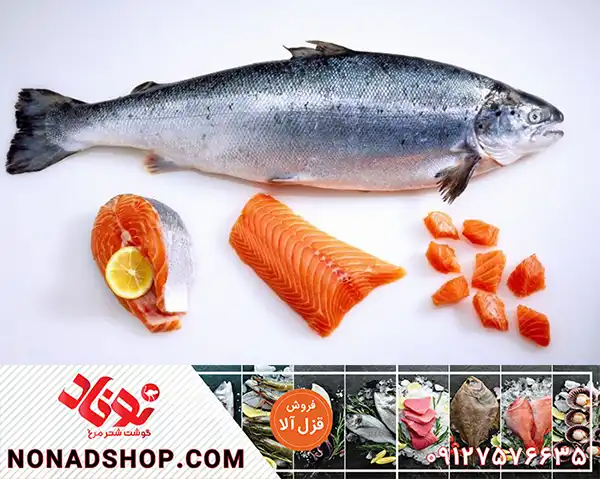 Global Salmon Market: Growth and Forecast
The salmon market has experienced strong growth over the past few years. According to market reports, the market size will rise from $30.6 billion in 2025 to $32.71 billion in 2026 and is expected to reach $42.46 billion by 2030. This sustained growth is driven by factors such as rising demand for premium seafood, expansion of online retail, investment in sustainable fish farming, and adoption of advanced processing technologies.
One of the most important market trends is the growth in consumption of ready-to-eat (RTE) salmon products. Today’s consumers seek options that are both nutritious and require little preparation time. This shift in consumer behavior has moved the salmon market from a bulk commodity toward value-added products.
Nutritional Value of Salmon and Its Preservation During Processing
The main advantage of salmon in the ready-to-eat food industry is its unique nutritional profile. Salmon is a rich source of high-quality protein, vitamin D, B vitamins, and most importantly, omega-3 fatty acids, including EPA and DHA. Research has shown that processing methods such as thermal extrusion do not degrade the omega-3 content of Atlantic salmon. This scientific finding is crucial for the ready-to-eat food industry because it proves that processed salmon products can be produced that are nutritionally comparable to fresh fish.
A variety of processed salmon products are available on the market: salmon sausage with 360 mg EPA and DHA per 100 g, salmon meatballs with 466 mg DHA and 333 mg EPA per 100 g, and salmon pâté, which is rich in omega-3 fatty acids. This product diversity shows that salmon can be present in different food formats without losing its nutritional properties.
Salmon Exports: The Driving Engine of the Global Ready-to-Eat Food Industry
International salmon trade is one of the most dynamic segments of global food trade. Norway and Chile, as the two main salmon exporters, supply the global market.
In week 38 of 2026, Norway exported 31,120 tonnes of fresh salmon, a significant increase compared with 24,567 tonnes in the same week of 2025. From the beginning of the year through that week, Norway’s fresh salmon exports reached 852,664 tonnes. The main destinations included the European Union, Poland, the Netherlands, France, Spain, Italy, the United Kingdom, and the United States.
Chile has also performed impressively. Chile’s salmon and trout exports in the first four months of 2026 reached 324,926 tonnes worth $2.53 billion, representing 15.6% volume growth and 6% value growth compared with the same period last year. China, with 137% growth in import volume, recorded the fastest growth among destination markets. The United States remained Chile’s largest single destination market, while Japan and Brazil were also important markets.
These figures show that export-grade salmon meat is a strategic commodity in the global food supply chain, and importing countries depend on it to secure high-quality protein.
The Role of Salmon in Ready-to-Eat and Ready-to-Cook Products
Because of its high adaptability across different formats, salmon has become an ideal product for the ready-to-eat food industry. Smoked salmon, as a premium RTE product, holds a special place on retail shelves. Vacuum-sealed smoked salmon fillets were priced at €36–38 per kilogram in December 2025, reflecting the high value of this product.
A variety of salmon products fall into the ready-to-eat category:
· Ready-to-eat salmon salad: a combination of cooked salmon with quinoa, asparagus, and vegetables that is consumed without preparation.
· Salmon burger: a ready-to-cook product with 20 g of protein and omega-3 that cooks in just a few minutes.
· Smoked salmon snack: the global smoked fish snack market was valued at about $986 million in 2025 and is projected to reach $1.7 billion by 2033.
· Ready-to-eat salmon steak: in South Korea, CJ CheilJedang sold 1.4 million units of its bibigo salmon steak just six months after launch.
Consumer Demand: Why Salmon?
Three main factors drive consumer demand for salmon in prepared products:
First, busy lifestyles. With increasing urbanization and dual-income households, consumers are turning to proteins that require the least preparation time. In Japan, the Ministry of Agriculture reported that processed products account for 70% of seafood supply.
Second, health awareness. The growth of low-carb, ketogenic, and pescatarian diets has increased demand for high-protein, omega-3-rich salmon products. Research in Germany showed that 34% of adults intended to reduce red meat consumption, while only 8% intended to reduce fish consumption.
Third, convenience and quality. Smoked salmon and its prepared products provide a restaurant-like experience at home at a lower price. More than 30% of global seafood consumers increased their at-home fish consumption during periods of inflation.
 Cold Chain and Export Logistics for Salmon
One of the main challenges in the export-grade salmon meat trade is maintaining quality during transport. Advanced logistics solutions have been developed for this purpose. Maersk has designed an end-to-end temperature-controlled logistics solution for salmon that uses a dedicated air network, an integrated cold chain, and rapid customs clearance, and has managed to deliver salmon to distant destinations without any cases of spoilage or quality rejection.
Sub-chilling technology also helps reduce greenhouse gas emissions and costs because it reduces the need for ice and packaging materials. These innovations have enabled a shift from air transport to sea transport for long-term exports, which offers significant economic and environmental advantages.
Future Trends in the Salmon Industry in Ready-to-Eat Food
Several key trends will shape the future of this industry:
Expansion in Asia-Pacific: The smoked fish snack market in Asia-Pacific is experiencing the fastest growth, driven by rising disposable incomes and rapid urbanization. In China, e-commerce platforms such as Freshippo and Meituan have made same-day delivery of smoked salmon to inland cities possible.
Sustainability and transparency: Consumers are increasingly paying attention to farming methods, feed composition, antibiotic use, and packaging recyclability. Producers are moving toward integrated supply chains from egg to plate to gain greater control over quality and transparency.
Smart processing: Automation of filleting, slicing, and visual inspection improves the yield and consistency of salmon products, while digital farming systems link fish health data with downstream processing quality.
Challenges and Barriers

Despite impressive growth, the salmon industry also faces challenges. Raw material price volatility, new food safety regulations, and global trade changes can affect supply and prices. In addition, the gap between volume and value growth in Chile’s exports in 2026 reflects price pressure and increasing global competition.
Conclusion
Salmon and export-grade salmon meat have become the backbone of the global ready-to-eat food industry for several reasons: a superior nutritional profile with omega-3 and high protein that is preserved during processing, exceptional adaptability across formats from salads and burgers to snacks and main dishes, a mature export supply chain with advanced cold logistics, and growing consumer demand for convenience without compromising health. With the market projected to grow to $42 billion by 2030, salmon’s role in the ready-to-eat food industry is not only established but expanding into new markets and innovative formats.
For more info call us in
Nonadshop.com

Parvisico.com



بدون دیدگاه