

An International Marketing Blueprint for Iranian Caviar in the Joint Free Trade Zone
The emergence of a joint free trade zone among the Caspian Sea littoral states marks a pivotal shift in regional commerce. For foreign buyers of Iranian caviar, this evolving framework opens a fast-track gateway to premium products with streamlined logistics, reduced costs, and simplified customs procedures—all backed by formal economic agreements. To help international buyers navigate this new landscape, this article presents a strategic marketing blueprint for sourcing and selling Iranian caviar in the Caspian joint free trade zone.
-
Understanding the Caspian Free Trade Zone Advantage
The creation of joint free trade zones among the Caspian littoral states—Iran, Russia, Azerbaijan, Kazakhstan, and Turkmenistan—has been explicitly endorsed by all five governments as a mechanism to multiply trade volumes and attract investment. At the Third Caspian Economic Forum in Tehran in 2025, Iran’s Vice President put forward a formal proposal to establish such zones alongside an Assembly of Caspian Coastal Provinces’ Governors, signalling serious high-level commitment.
For a foreign buyer, the commercial implications are substantial. Once a consignment enters the free trade zone, it can be processed, stored, and re‑exported to the mainland territories of the five littoral states—or onward to Europe and Asia—with zero or substantially reduced customs duties. This arrangement effectively turns the Caspian region into a distribution hub for Iranian caviar, eliminating multiple layers of border formalities and slashing end‑to‑end supply‑chain lead times.
-
The New Trade Architecture: EAEU–Iran FTA

Since May 2025, the free trade agreement between the Eurasian Economic Union (EAEU) and Iran has been in force, eliminating import duties on approximately 80% of Iranian goods—including caviar—entering Russia, Armenia, Belarus, Kazakhstan, and Kyrgyzstan. For international buyers, this agreement transforms the Caspian zone into a zero‑tariff corridor linking the Persian Gulf to the markets of the EAEU. A shipment cleared through the free zone can cross into the Russian Federation or Kazakhstan without attracting the duties that would otherwise apply at a conventional customs checkpoint.
This is particularly relevant for buyers targeting Russia’s luxury seafood market, which has historically recognised Iranian caviar as a premium product. Likewise, Kazakhstan, with its fast‑growing luxury hotel and retail sector, has been identified by Russian trade analysts as one of the most promising destinations for caviar within the CIS.
-
Why Iranian Caviar Holds Its Edge

Despite strong competition from Russian, Chinese, and Azerbaijani producers, Iranian caviar continues to command the highest average unit price in the world market—a proxy for perceived quality among luxury consumers.
Several factors underpin this premium positioning:
Factor Commercial Implication
Strict farm‑raised production All Iranian caviar is now farm‑raised, ensuring compliance with CITES regulations and EU import rules—a critical requirement for European and North Asian buyers.
Species diversity Iranian farms produce Beluga, Ossetra, Sevruga, and Siberian varieties, allowing buyers to build a diverse product portfolio from a single source.
HACCP & EU‑code processing Processing facilities meet EU sanitary standards, removing a major barrier to entry into Western European markets.
Heritage branding Iranian caviar benefits from a centuries‑old reputation that resonates strongly with high‑end consumers in Europe and the Gulf.
-
Marketing Principles for the Caspian Free‑Zone Buyer
Selling Iranian caviar in the Caspian region requires a marketing strategy that is distinct from what works in Dubai, Shanghai, or London. The following principles are tailored to the realities of B2B luxury‑food marketing within the Caspian free trade zone.
4.1 Segment the Market by Buyer Profile
Within the Caspian littoral states, three broad buyer segments can be identified:
-
High‑end hotel and restaurant chains in Moscow, St. Petersburg, Almaty, and Baku. These buyers value reliable cold‑chain delivery, consistent grain size, and CITES‑compliant documentation.
-
Specialist gourmet retailers serving the domestic luxury market. They look for distinctive packaging and a compelling brand narrative.
-
Regional re‑exporters who purchase bulk caviar in the free zone for onward shipment to Europe, the Gulf, or East Asia. For these buyers, price per kilo, volume availability, and regulatory paperwork are the decisive factors.
Aligning the product grade, packaging format, and supply terms with each segment’s specific requirements is essential.
4.2 Position the Brand on Heritage and Sustainability
Iranian caviar enjoys a natural advantage in brand storytelling. Buyers are advised to foreground:
-
The farm‑to‑fork narrative: emphasise that the caviar originates from carefully managed aquaculture farms along the Caspian coast.
-
Sustainability credentials: all Iranian caviar is CITES‑registered and comes from captive‑bred stock, which is a powerful differentiator in markets where wild‑caught caviar is increasingly viewed with suspicion.
-
Regional authenticity: the label “Produced in the Caspian Free Trade Zone” can serve as a mark of both quality and logistical efficiency.
4.3 Leverage the Free Zone for Value‑Added Services
The free zone is not merely a customs‑avoidance tool; it can function as a value‑addition hub. Caviar imported into the zone can be:
-
Repacked into smaller formats tailored to specific retail markets.
-
Co‑branded with local luxury retailers.
-
Stored in temperature‑controlled warehouses for just‑in‑time delivery to regional clients.
Optimise the Supply Chain Through the Caspian Corridor
The Caspian Sea sits at the intersection of three major trade corridors: the Western route (via Azerbaijan and Russia), the Eastern route (via Kazakhstan and Turkmenistan), and the Trans‑Caspian route directly across the sea. For a buyer operating in the free zone, the optimal logistics strategy typically involves:
-
Air freight from Tehran to a Caspian free‑zone airport (e.g., Astrakhan, Aktau, or Baku).
-
Temperature‑controlled warehousing within the free zone, maintaining the mandatory ‑2 to +2 °C storage temperature.
-
Last‑mile refrigerated truck delivery to the customer’s premises.
This configuration ensures the cold chain remains unbroken throughout the journey—an absolute prerequisite for preserving caviar quality and meeting the audit requirements of luxury hotel chains.
-
Practical Guide for the Foreign Buyer
5.1 Securing the CITES Documentation
As is the case in all international caviar trade, the CITES permit is the central document. The Iranian supplier applies for both the CITES and veterinary export permits, then forwards copies to the buyer so that the matching import permit can be obtained from the destination country. Advice: always verify the supplier’s CITES registration code on the official CITES website before committing to a purchase.
5.2 Customs Clearance in the Free Zone
Because the free zone is, by definition, a customs‑suspension area, the clearance process is considerably simpler than at a standard border post. The consignment is typically cleared against:
-
The supplier’s commercial invoice and packing list.
-
The original CITES export permit.
-
A veterinary health certificate issued by the Iran Veterinary Organization.
Once cleared into the free zone, the caviar can be stored, processed, or re‑exported without incurring customs charges, provided it does not enter the domestic territory of the host country. If the buyer subsequently wishes to introduce the goods into, say, Russia or Kazakhstan, the EAEU–Iran FTA’s preferential duty rates will apply.
5.3 Managing the Payment Channel
Sanctions‑related banking restrictions remain an issue, but the Caspian region offers several workable solutions:
-
EAEU‑based SPVs: A Russian or Kazakh entity purchases the caviar from the Iranian supplier and then re‑invoices the foreign buyer.
-
Regional exchange houses: Funds are routed through established FX houses in the UAE or Turkey.
-
Digital settlement: USDT (Tether) is increasingly used for B2B caviar transactions, provided both parties document the arrangement in a formal contract.
5.4 Tailoring the Packaging
-
For the Russian/CIS market: Metal tins with bilingual Russian–English labelling.
-
For Kazakhstan and Central Asia: Gift‑style wooden or leather boxes are preferred by the retail segment.
-
For onward export to Europe: Minimalist matte‑finish metal tins with full traceability information printed on the label.
-
Risk Factors and Mitigation
Risk Mitigation
Cold‑chain break Use active temperature‑controlled containers with real‑time data‑loggers; insure the shipment against spoilage.
CITES documentation delay Build a 2‑4 week lead time into the supply contract; work only with CITES‑registered suppliers.
Currency volatility Denominate contracts in euros or USDT; include a currency‑adjustment clause.
Geopolitical disruption Diversify logistics routes across at least two corridors (e.g., Azerbaijan–Russia and Kazakhstan–Russia).
-
Conclusion
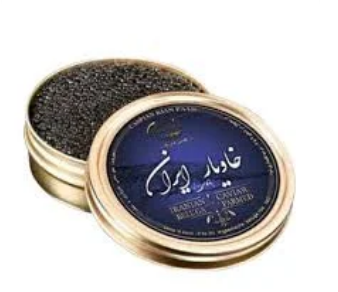
The Caspian joint free trade zone is more than a policy announcement—it is a commercially viable corridor that can drastically reduce the landed cost of Iranian caviar for buyers serving Russia, Central Asia, the Caucasus, and beyond. By aligning the inherent quality strengths of Iranian caviar with the tariff advantages of the EAEU–Iran FTA, and by adopting a marketing approach that is finely tuned to the region’s distinct buyer segments, international importers can build a durable, high‑margin business in one of the world’s most storied luxury food categories.
Ready to source premium Iranian caviar through the Caspian free trade zone? Contact our trade desk today for supplier verification, CITES compliance support, and a tailored logistics proposal.
NONADSHOP GROUP COMPANY

WITH HIS FOCUS IN CASPIAN SEA AND COUNTRIES THAT LAND IN MARKET READY FOR HELP TO ALL TRADERS AND OTHER USERS FOR TRADE CAVIAR.
PARVISICO.COM
http://parvisico.com



بدون دیدگاه