
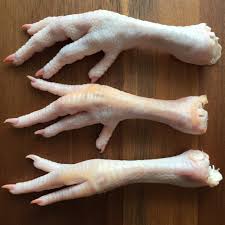
What Role Will Chicken Feet and Paw Exports Play in Iran’s Future Economy
Introduction
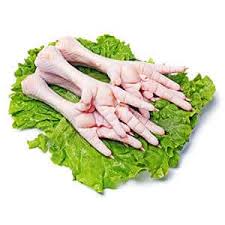
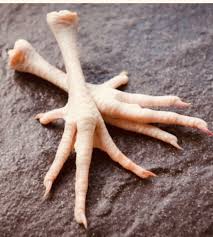
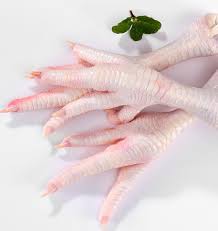
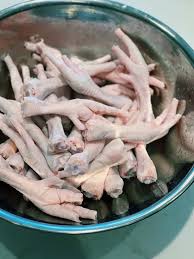
When discussing Iran’s non-oil export future, eyes naturally turn to petrochemicals, steel, pistachios, and saffron. Yet hidden among the by‑products of the poultry industry lies an overlooked treasure – chicken feet and paws – with the potential to reshape economic dynamics on a regional and global scale.
The question is: can exports of this secondary product, currently ignored in many Iranian slaughterhouses, become a major foreign currency earner for the country in the next decade? By examining global trends, competitive advantages, and structural challenges, this article analyses the true role of chicken feet in Iran’s future economy.
-
The Global Chicken Feet Market – a US$10 Billion Opportunity
According to FAO reports, global trade in frozen chicken feet exceeded US$8 billion in 2023 and is projected to reach over $12 billion by 2030. The main importing countries are:
-
China (>40% of global demand)
-
Vietnam (8% annual growth)
-
Hong Kong & Indonesia (Halal requirements)
-
Nigeria & South Africa (emerging markets)
Iran’s current share of this market is less than 1%. Yet even that small share generated over US$120 million in export revenue in the last Iranian year (March 2023–March 2024). With a targeted export strategy, reaching a 5% share (about $600 million annually) by the horizon of 2031 (1410 Persian calendar) is entirely feasible.
-
Why Can Chicken Feet Become a Future Export Powerhouse for Iran?
-
a) Value from Waste
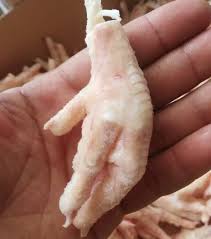
Chicken feet have almost no mass consumption inside Iran (except in a few traditional dishes). Converting this waste product into an export commodity means creating value out of nothing. In a future where water and animal feed resources become more limited, optimal use of every part of the chicken carcass will be an economic necessity.
-
b) Completing the Poultry Value Chain
Iran is one of the largest broiler meat producers in the Middle East (over 2.5 million tons annually). Exporting chicken feet fills the missing link in the value chain. Instead of raw sales, primary processing (peeling, grading, vacuum packaging) can increase value‑added by three to four times.
-
c) Job Creation in Deprived Areas
Chicken feet processing units require semi‑skilled labour near slaughterhouses (mainly in Tehran, Isfahan, Fars, Mazandaran, and Khorasan provinces). Each modern packaging line can directly create 50–100 jobs. In the future, this industry could become a driver of rural development.
-
d) Resilient to Sanctions
Products such as chicken feet are considered humanitarian goods and are generally not subject to direct financial sanctions. Moreover, the main customers (China, Vietnam, Africa) are countries with political ties independent of the West. This makes chicken feet exports a sustainable foreign‑currency channel even under sanctions.
-
Structural Challenges that Must Be Solved for the Future
Iran’s future economy cannot materialise without removing existing obstacles. The most critical challenges for chicken feet exports are:
Challenge Future‑oriented solution
Lack of modern sorting and peeling lines Joint ventures with Chinese or Turkish companies to install automated machinery
Banking and currency transfer issues Establishing clearing hubs in the UAE and Oman; using stable coins for B2B trade
Seasonal quality fluctuations Building large‑scale IQF (Individual Quick Freezing) cold stores to standardise quality
No unified export brand or standard Forming an export consortium under a common brand such as “Persian Paw”
-
Likely Scenarios for the Economic Future (Horizon 2031)
Optimistic scenario (sustainable progress)
-
US$50 million investment in 10 modern processing lines
-
Achieving 4–5% share of global market (~$600 million per year)
-
Creating 8,000 direct and 25,000 indirect jobs
-
Reducing dependence on oil revenues by 0.5% of GDP
Realistic scenario (gradual growth)
-
Maintaining a 2% market share ($250 million)
-
Gradual improvement of cold‑storage infrastructure
-
10% annual export growth
Pessimistic scenario (status quo continues)
-
No investment; continued raw, bulk exports
-
Losing competitive markets to Turkey and Pakistan
-
Share below 1% and unstable foreign exchange earnings
-
Role of Government and Private Sector in Realising a Bright Future
For chicken feet exports to become an economic pillar, the following actions are essential:
Government:
-
Tax credits for advanced processing units
-
Bilateral trade agreements with China and Vietnam offering preferential tariffs for chicken feet
-
Support for Iranian companies to participate in food exhibitions in Asia and Africa
Private sector:
-
Forming a specialised association of chicken feet exporters
-
Investing in R&D (e.g., producing gelatin powder from chicken feet for pharmaceutical and food industries)
-
Creating export brands with attractive, standardised packaging
Conclusion: From a By‑product to a Strategic Export Powerhouse
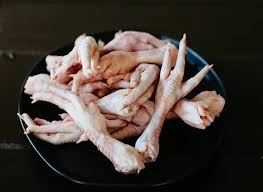
Exports of chicken feet and paws can play a role far beyond an ordinary commodity in Iran’s future economy. This product represents a new paradigm: circular economy, maximum efficiency of livestock resources, and entry into international markets with minimal political dependency.
If Iran invests today in processing infrastructure, cold‑chain logistics, and trade diplomacy for this product, before long, Iranian chicken feet will stand alongside pistachios and saffron, making Iran’s name known in East Asia and Africa. The opportunity is not being lost – but the golden time to invest is now.

بدون دیدگاه