

Environment on the Export Performance of Iranian Caviar

Abstract

This article examines the impact of strategic sustainability management and export environment variables on the export performance of Iranian caviar, drawing on research conducted by Shahabadi, Jafari, and Emami (2019) and complementary studies. Using path analysis in LISREL software on data collected from managers of Iranian caviar exporting companies, the research demonstrates that strategic sustainability management has the most significant impact on caviar export performance, followed by export flexibility, export market-oriented behavior, and market dynamism . This finding is particularly relevant given the rapid growth of Iran’s caviar industry, with production reaching 25.1 tons in 2024 (17% growth) and exports expanding to 42 international markets . The article provides a comprehensive analysis of these influencing factors and offers practical recommendations for Iranian caviar exporters seeking to enhance their international performance

1. Introduction
The Strategic Importance of Caviar Exports
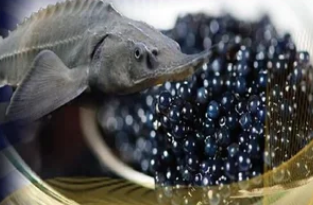
Iran is one of the world’s major caviar producers, with caviar representing one of the most important export products in the country’s fisheries sector . The Iranian caviar industry, particularly the Beluga variety from the Caspian Sea, is globally recognized as the finest and highest-quality caviar in the world, valued between $700 and $1,000 per kilogram in international markets . Iran supplies approximately 45% of global caviar production and, despite recent growth, holds a modest share of the global market—ranking 14th worldwide, while China commands roughly 30% of the global caviar market .
Given the importance of caviar exports as a source of foreign exchange for Iran and the need to maintain the country’s position in international trade, understanding the factors that influence export performance is essential for strategic decision-making . This article focuses on the impact of strategic sustainability management and the export environment on caviar export performance, drawing on empirical research conducted in Iran.

2. Theoretical Framework: Key Influencing Factors
2-1. Strategic Sustainability Management
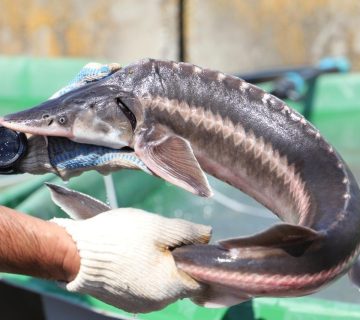
Strategic sustainability management refers to the integration of environmental, social, and economic sustainability considerations into an organization’s strategic planning and operational processes. For Iranian caviar exporters, this concept has particular relevance given the shift from wild-caught to farmed caviar production, driven by sturgeon population declines and conservation efforts .
Research has shown that Iranian companies can achieve high international performance through green export marketing planning by identifying specific market needs and interests, shortening the value chain through direct exports, implementing competitive pricing systems, and conducting foreign marketing advertisements emphasizing cultural, social, food, and pharmaceutical characteristics .
2-2. Export Market-Oriented Behavior
Export market-oriented behavior refers to the extent to which a company collects and uses market information to understand and respond to foreign customer needs, competitor actions, and regulatory requirements . For caviar exporters, this involves:
Understanding consumer preferences in target markets
Monitoring competitor activities and pricing
Adapting product offerings to meet market demands
Developing appropriate packaging and branding strategies
2-3. Export Flexibility
Export flexibility is the ability of an exporting firm to adapt to changing conditions in foreign markets, including fluctuations in demand, regulatory changes, and logistical challenges . Given the challenges facing Iran’s caviar industry—including international sanctions, logistical disruptions (such as the February 2026 flight suspensions that temporarily reduced exports to zero), and intense competition from China, Russia, and other producers —export flexibility has become a critical capability for maintaining market presence and responding to disruptions.
2-4. Market Dynamism
Market dynamism refers to the rate of change in a market environment, including changes in consumer preferences, technological advancements, and competitive dynamics . The global caviar market has experienced significant dynamism in recent years, driven by:
The rise of farmed caviar production (China now commands 30% of the global market)
Increasing consumer demand for sustainable and ethically produced products
Shifting trade patterns due to geopolitical factors and sanctions


3. Research Findings
3-1. Methodology
The study by Shahabadi, Jafari, and Emami (2019) examined the impact of strategic sustainability management, export market-oriented behavior, export flexibility, and market dynamism on Iranian caviar export performance . The research utilized a descriptive survey methodology with data collected from managers of caviar exporting companies in Iran. The questionnaire demonstrated high reliability, with a Cronbach’s alpha of 0.9 . Data analysis was conducted using path analysis in LISREL Version 8.8 software.
3-2. Key Findings
The analysis revealed the following hierarchy of influence on caviar export performance :
Rank Influencing Factor Impact Significance
1 Strategic Sustainability Management Most Significant Significant
2 Export Flexibility Significant Significant
3 Export Market-Oriented Behavior Significant Significant
4 Market Dynamism Significant Positive
Strategic sustainability management was identified as having the most significant impact on caviar export performance of Iran . This finding reflects the growing importance of sustainability considerations in international markets, particularly as consumers increasingly demand products that are ethically and environmentally produced.
Following strategic sustainability management, export flexibility emerged as the second most significant factor. This finding aligns with the challenges facing Iranian caviar exporters, including the need to adapt to rapidly changing market conditions.
Export market-oriented behavior and market dynamism also had significant positive impacts on export performance . These factors underscore the importance of market intelligence and adaptability in competitive international markets.
3-3. Supporting Evidence
Research conducted by Ghaznavi (2024) using cointegration analysis and Granger causality tests on data from 1991-2020 confirmed that factors such as Iran’s export price, average world price, exchange rate, world export amount, and sanctions significantly affect Iran’s caviar exports . The error correction mechanism coefficient of 0.98 indicated that 98% of imbalances in Iran’s caviar exports are resolved in each period, suggesting a relatively efficient adjustment mechanism .

4. The Export Environment: Current Market Context
4-1. Growth in Production and Exports
4-2. Market Challenges
Despite growth, Iranian caviar exporters face significant challenges:
International sanctions: Sanctions restrict exports, creating logistical and trade barriers . The Globalization and Level of International Trade (LIT) research confirmed that the removal of trade restrictions leads to increased caviar exports .
Competition: China, Russia, Azerbaijan, and Kazakhstan are expanding their caviar industries . China currently commands approximately 30% of the global caviar market .
Logistical disruptions: The suspension of international flights in February 2026 disrupted air freight routes—the main channel for caviar shipments—reducing exports to zero, though operations were later normalized through re-exporting via third-country air routes .
Counterfeit products: The problem of counterfeit caviar products (particularly Chinese caviar marketed under Russian brands) affects consumer confidence in Caspian caviar .
Luggage trade: In 2022, approximately 36% of Iran’s caviar exports were conducted through luggage trade, indicating efforts to circumvent export restrictions .

6. Conclusion
Research examining the impact of strategic sustainability management and export environment variables on Iranian caviar export performance has revealed a clear hierarchy of influential factors. Strategic sustainability management has been identified as having the most significant impact on caviar export performance, followed by export flexibility, export market-oriented behavior, and market dynamism .
These findings are particularly relevant given the current state of Iran’s caviar industry. Production has reached 25.1 tons (17% growth), exports have expanded to 42 international markets, and the industry is transitioning from wild-caught to farmed production . However, significant challenges remain, including international sanctions, logistical disruptions, intense competition from countries like China, and trade restrictions .
For Iranian caviar exporters, the path to enhanced international performance lies in strengthening strategic sustainability management, developing export flexibility, becoming more market-oriented, and leveraging market dynamism. By implementing these strategies, Iranian caviar exporters can build on the country’s historic reputation as a premium caviar producer to capture larger shares of growing international markets and achieve the industry’s ambitious targets of producing over 140 tons of caviar and 20,000 tons of sturgeon meat .

For more info call us in export caviar

Nonadshop.com


بدون دیدگاه