
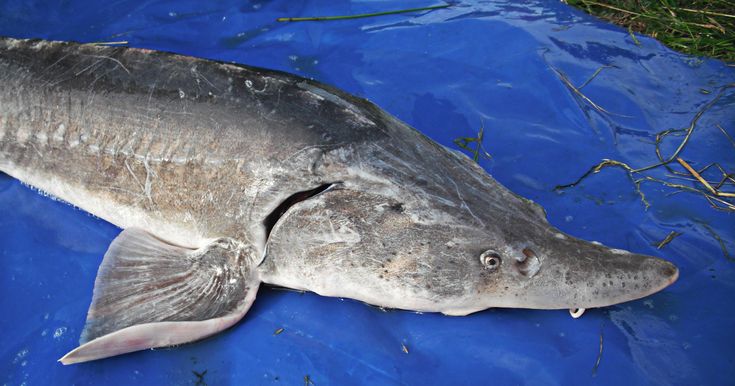
Differences Between Rail and Sea Export Logistics for Beluga Sturgeon from Iran to Other Countries
Introduction
When the Black Pearl Travels the World
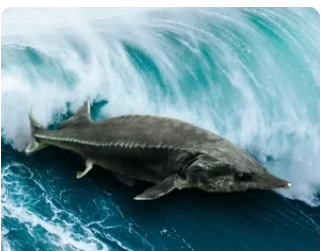
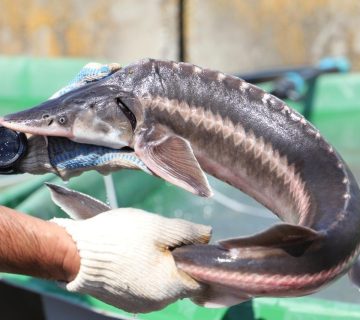
Beluga caviar (from the Beluga sturgeon, also known as the “elephant fish”) is the most expensive and highest‑quality caviar in the world, holding a special place in Iran’s non‑oil export portfolio. This product, known as the “Black Pearl of the Caspian Sea”, is not only a symbol of Iranian authenticity and quality but also a golden opportunity for traders in the luxury food sector.
However, unlike many other export commodities, Beluga caviar, due to its high perishability, extraordinary value, and CITES permit requirements, presents a complex and challenging path for exporters. One of the most sensitive and decisive stages is the choice of transport method. In this article, we examine in a specialised, comparative manner the differences between rail and sea export logistics for Beluga sturgeon and caviar from Iran to target markets.
Beluga Sturgeon and Caviar: A Luxury Product with Special Requirements
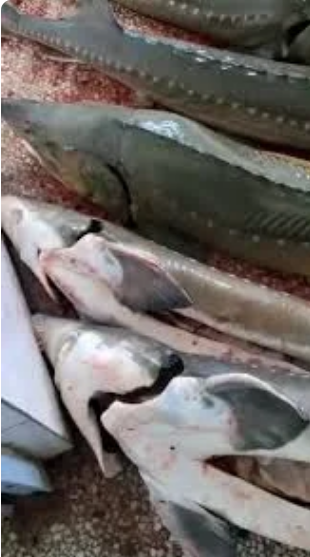
Before diving into logistics, let’s briefly note the product’s standing. According to FAO statistics, Iran is the world’s second‑largest caviar producer. According to Iran’s Deputy Minister of Agriculture, the target by the end of the Seventh Development Plan is to increase Iran’s caviar production to 140 tonnes and exports to 4.7 tonnes. Main markets include the European Union, the UAE, Japan, South Korea, China, Canada, and the United States.
The high value of the product (each kilogram of Iranian caviar sells for around €2,200 in European markets) and its extreme sensitivity to transport conditions mean that any logistics error leads to severe losses.

Sea Freight: The Backbone of Beluga Exports
Cold Chain at Sea – The Lifeline of the Cargo
Sea freight remains the most common method for exporting sturgeon meat and, in some cases, relatively large volumes of caviar. In this method, the use of refrigerated (reefer) containers is absolutely mandatory. These containers, with advanced cooling systems and precise humidity control, maintain the required internal temperature.
The standard storage temperature for caviar is between 0°C and -3°C. For frozen sturgeon meat, -18°C is required. Maintaining this temperature continuously from the factory cold room to the destination port is the beating heart of successful sea freight operations.
Key Maritime Routes
Beluga exports travel via the Caspian Sea and open waters
-
Northern route (Caspian Sea): From Iran’s northern ports such as Anzali, Nowshahr, and Amirabad to Russian ports (Astrakhan) and Kazakhstan. This route is highly efficient for nearby markets but faces limitations in cold seasons.
-
Southern route (Persian Gulf): From Shahid Rajaee Port (Bandar Abbas) and Imam Khomeini Port via the Indian Ocean and Suez Canal to Europe and other global destinations. Despite being longer (typically 30–45 days), this route provides access to a much wider range of world markets.
Classic Sea Route to Europe
Under normal conditions, a 20‑ft reefer container from Bandar Abbas travels across the Indian Ocean, the Red Sea, the Suez Canal, and the Mediterranean, reaching southern European ports in about 30 days.
Key point: Due to sanctions, access to foreign shipping lines is limited, and exporters often have to use domestic lines (e.g., IRISL) or transit through third countries.
Cost and Transit Time by Sea
Generally, sea freight is the cheapest method per kilogram, especially for large volumes. However, the long transit time (often over 30 days) is its main challenge, as it can endanger caviar quality on very long journeys.
Summary of Sea Logistics
-
Main advantage: Economical for large volumes and high carrying capacity.
-
Main challenge: Long transit time and risk of cold chain disruption.
Rail Freight: A New and Growing Corridor
A New Option for Sensitive Goods
In recent years, especially with the development of the International North‑South Transport Corridor (INSTC) , rail freight has emerged as a serious competitor to sea freight on northern routes. This corridor, founded in 2000 by Iran, Russia, and India, is about 7,200 km long and reduces transit time by up to 30% and costs by up to 40% compared to the traditional Suez Canal route.
Rail Routes for Beluga Exports
The most important rail routes are
-
Western route: From Tehran to Rasht, then across the Astara border into Azerbaijan, and from there to Russia and Europe.
-
Eastern route: Via Sarakhs and Incheh Boroun borders into Turkmenistan and Kazakhstan, and finally to Russia.
Good news: The Rasht‑Astara railway line – the missing link of this corridor – is being pursued with trilateral cooperation between Iran, Azerbaijan, and Russia. Once completed, continuous rail transport from central Iran to Russia will become possible.
Cold Chain by Rail – Possible but Less Developed
Contrary to common belief, rail transport of refrigerated goods is possible. Refrigerated rail containers (reefer wagons) exist and are used on some international routes. However, the refrigerated infrastructure of Iran’s railway network is not as extensive or ready as that of the ports. Currently, northern ports collectively have only 30 reefer containers (10 each at Anzali, Nowshahr, and Amirabad), and the railway network is even more limited in this regard.
Time and Cost by Rail
Rail freight typically takes between 15 and 22 days. Thus, rail freight sits between air freight (a few days but very expensive) and sea freight (30+ days) in terms of delivery time.
Rail costs compared to sea freight on similar routes (especially to CIS destinations) are competitive and sometimes cheaper, though rates are not fixed.
Summary of Rail Logistics
-
Main advantage: Faster than sea freight and higher route security.
-
Main challenge: Limited refrigerated infrastructure and need for transshipment at borders.
Comprehensive Comparison Table: Sea Freight vs. Rail Freight
Criterion Sea Freight Rail Freight
Transit time (to Russia/Europe) 30–45 days 15–22 days
Cost per kilogram Low (economical for large volumes) Medium (competitive with sea on northern routes)
Risk of spoilage (cold chain) Relatively high (due to long distance and transshipment) Medium (shorter and more direct route)
Availability of refrigerated ports/stations High and developed Developing and relatively limited
Cargo security (theft/damage) Medium (risk at transshipment ports) High (more precise monitoring)
Impact of sanctions High (restrictions on international lines) Relatively low (rail corridor under Iran and allies’ control)
Suitable cargo volume Above 5 tonnes Between 1 and 10 tonnes
Suitable product type Frozen Beluga meat (bulk transport) Premium caviar and high‑value meat
Need for transshipment Usually once or twice at intermediate ports Once (bogie change at Astara or Sarakhs border)
How to Choose the Right Transport Method for Beluga Exports
The choice depends on several factors. Here is a practical decision guide:
When to choose sea freight
-
If cargo volume is large (several tonnes), sea freight is the most cost‑effective option.
-
If the destination market is more accessible via open waters (Western Europe, Southeast Asia).
-
If the product is mainly frozen Beluga meat rather than premium caviar (less sensitive).
-
If transport cost is the top priority and time is not critical.
When to choose rail freight
-
If the destination is Russia, Kazakhstan, or other CIS countries – the North‑South Corridor is optimised for these routes.
-
If you have medium cargo volume (a few tonnes) and high price sensitivity.
-
If delivery time is a priority and you cannot wait 30 days.
-
If you are looking for a safer, more stable alternative under sanctions and political tensions – because the Iranian and Russian railways are not directly affected by maritime sanctions.
-
If your product is premium caviar with the highest price tag, where even a small delay could damage your brand reputation.
When to consider air freight (as a third option)?
Although this article focuses on land and sea, we note that air cargo for very small, ultra‑luxury caviar shipments (a few kilograms) is the best option, but its cost is far higher than both other methods.
The Role of Sanctions and Logistics Constraints
When choosing a transport method, the sanctions factor cannot be ignored:
-
Sea freight – due to restricted access to international shipping lines – may sometimes be forced to use longer routes and expensive transshipments at third‑country ports (e.g., Dubai or Oman), which increases both time and cost.
-
Rail freight, although seemingly more immune to sanctions, still faces challenges such as missing direct rail links (e.g., the missing Rasht‑Astara link) , forcing cargo to be transferred to refrigerated trucks at the border. This transshipment is itself a serious weakness in maintaining the cold chain.
-
Both methods are highly dependent on exchange rate fluctuations, fuel prices, and weather conditions.
Conclusion: A Strategic Choice for Successful Exports
The difference between rail and sea logistics for Beluga sturgeon exports from Iran is not merely an “operational” choice; it is a strategic decision that directly affects your final product cost, quality, and brand reputation.
For bulk frozen Beluga meat (volumes above 5 tonnes), sea freight remains the first option. Its economic cost is undeniable, provided the cold chain is meticulously maintained.
However, for exporting high‑value Beluga caviar, especially to Russia, Kazakhstan, and northern/eastern countries, rail freight is an attractive and growing option. Shorter transit time (from 30 to 15 days), lower spoilage risk, and in some cases competitive costs are its key advantages.
Final recommendation for traders: Before each shipment, conduct a detailed cost‑benefit analysis including transport cost, time, product sensitivity (premium caviar vs. frozen meat), and destination market conditions. Use freight forwarders specialised in refrigerated cargo and always have specialised cold chain insurance. An informed choice of transport method is the difference between a profitable export and a spoiled, rejected shipment.
OUR EXPERIENCE IN LOGISTIC GOODS CAN HELPFUL FOR TRADERS IN ALL THE WORLD
NONADSHOP COMPANY



بدون دیدگاه