
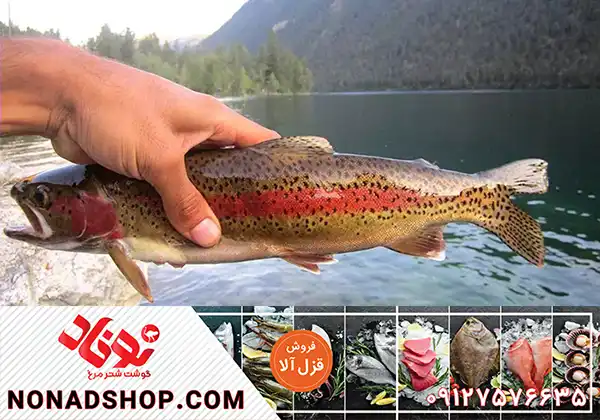
Complete Production Cycle of Iran’s Export Salmon From Egg to Global Markets
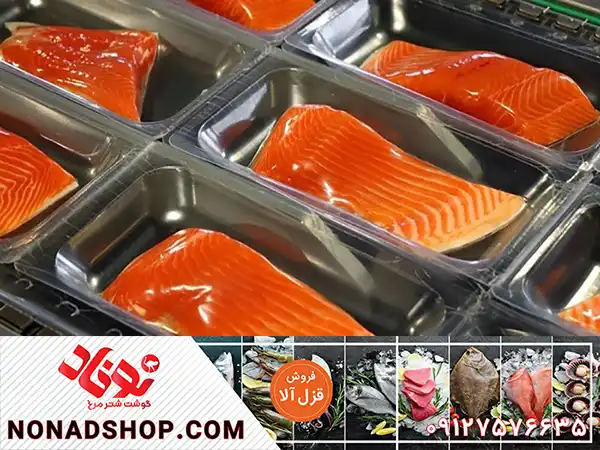
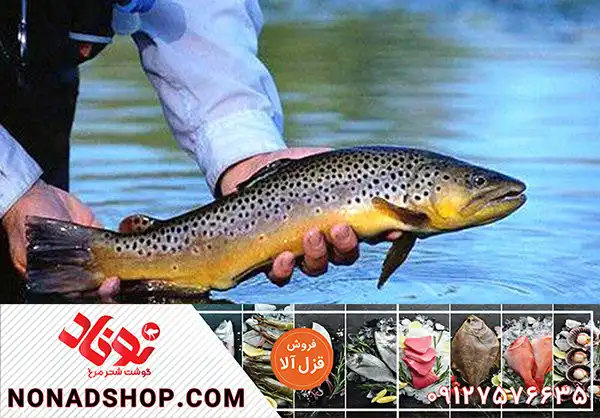
Iran’s salmon export industry, although known as “salmon,” is actually based on the high-quality farming of Rainbow Trout. The head of Iran’s Veterinary Organization has emphasized that Norwegian Atlantic salmon is not produced in Iran, and what is marketed under this name is actually Iranian rainbow trout, which, due to the similarity of its flesh color to Norwegian salmon, is sold at a higher price in the market.
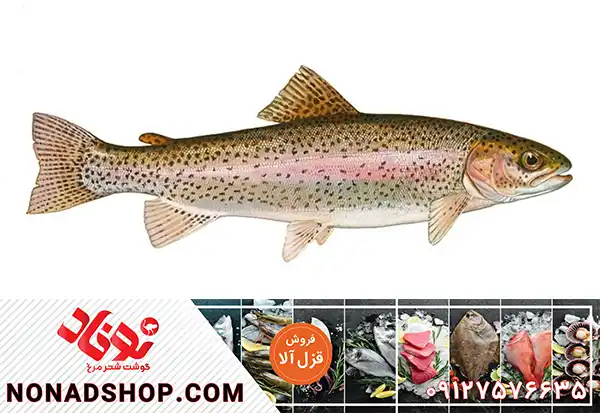
Nevertheless, Iran is recognized as one of the world’s largest producers of freshwater rainbow trout. With a history spanning several decades, trout farming in Iran has reached a level of maturity and standardization where the final product can compete with foreign counterparts in regional markets. In this article, we examine the complete production cycle of Iran’s export “salmon-like” trout, from spawning to delivery to target markets.
Loop One: Artificial Propagation and Eyed Egg Production
The production cycle of Iran’s export rainbow trout begins at Artificial Propagation Centers. In these centers, carefully selected male and female broodstock are managed under precise conditions.
Propagation Process
-
Male and female broodstock are starved for about 48 hours prior to propagation.
-
Then, with great care, eggs and sperm are extracted from the broodstock, and artificial fertilization is performed.
-
The fertilized eggs are kept at a constant temperature in incubator tanks.
Incubation Period
During this stage, rainbow trout eggs develop into eyed eggs. Some of these eyed eggs are still imported to meet the needs of farming centers. However, Iran has successfully managed artificial propagation of this species domestically since the early 1960s (1340s in the Persian calendar).
After the incubation period, larvae hatch from the eggs. Four to six weeks after hatching, the juvenile fish are capable of independent feeding and are transferred to larger freshwater tanks.
Loop Two: Larval Rearing and Fingerling Production
In this stage, the newly hatched larvae are placed under special care to grow into fingerlings.
Rearing Conditions
-
Trout farming must be conducted in open environments with flowing fresh water.
-
The optimal water temperature for feeding and growth is between 15 and 16 °C.
-
Larval and juvenile feeding begins with live food, including worms, insects, and aquatic larvae, gradually transitioning to formulated feeds.
Rearing Duration
After 10 to 16 months in fresh water, the young trout are ready for the next stages of production. At this point, each fish weighs between 60 and 100 grams.
Loop Three: Fattening in Raceways and Sea Cages
The most important and longest stage of the production cycle is fattening. Here, the fingerlings are transferred to larger ponds or sea cages to reach export-ready weights.
Types of Rearing Methods
-
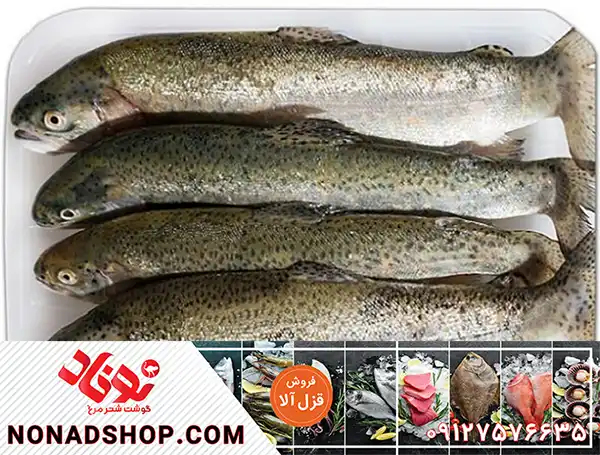
Raceway Pond Cultivation
The most common method of trout farming in Iran is the use of long, flowing freshwater raceways. This method is particularly prevalent in mountainous and cold regions such as Chaharmahal and Bakhtiari, Lorestan, and Hamedan.
-
Sea Cage Cultivation
This is a modern and developing approach, recently implemented in southern provinces like Khuzestan. Cage farming is capital-intensive; for every 1,000 tons of production, approximately 110 billion tomans in investment is required, with a capital return period of 4 years.
Nutrition during the Fattening Stage
Trout nutrition at this stage relies on specialized dietary feeds, which come in three main types:
-
Starter diet (SFT): For early growth stages.
-
Growth diet (FFT): For weight gain.
-
Fattening diet (GFT): For the final fattening phase.
The feed is typically produced as floating pellets through an extrusion process.
Creating Pink Flesh Color (Natural Pigmentation)
One of the key features that makes Iranian rainbow trout resemble Norwegian salmon is its pink flesh color. This color is not achieved through chemicals, but by adding permitted plant-based carotenoid pigments to the feed at the end of the rearing period. Iran’s Veterinary Organization has confirmed that the use of these permitted pigments poses no health concerns.
Loop Four: Health Management and Disease Control
One of the most sensitive loops in the production cycle is health management. Diseases are a major challenge in trout farming. Adhering to health principles, properly managing water circulation and filtration systems, and boosting the fish’s immune system are among the most important preventive measures.
Key Health Measures
-
Quarantine and Disinfection: Use of non-iodized salt for disinfection, stress reduction, and treating certain fungal and parasitic diseases.
-
Continuous Monitoring: Implementation of active surveillance programs to identify infected hotspots and prevent viral diseases.
-
Compliance with Health Guidelines: All breeding and rearing farms are required to follow the guidelines issued by the Iran Fisheries Science Research Institute.
Loop Five: Harvesting and Processing
Once the fish reach the appropriate weight (typically 2 to 5 kilograms), it is time for harvesting and processing.
Processing Methods
Iran’s export rainbow trout is processed and packaged in two main forms:
-
Fresh Fish
-
Immediately after harvest, the fish are packaged in styrofoam boxes with ice.
-
For fresh export, samples are sent to regional laboratories, and after necessary tests, a Health Certificate is issued.
-
Frozen Fish
-
After washing and gutting, the fish are frozen at low temperatures.
-
Packaging is done using vacuum, plastic, or cellophane wrapping.
Value-Added Products
Some advanced processing units produce higher value-added products such as fillets and smoked fish, which are highly sought after in the region’s luxury markets.
Loop Six: Exports and Target Markets
The final loop in the cycle is exporting to target markets. All standards set by Iran’s Veterinary Organization and Fisheries Organization are observed in the production of export products.
Main Markets
-
Russia: One of the largest destinations for Iranian rainbow trout. Indirect exports via Azerbaijan also take place, and statistics show that trout exports to Russia have exceeded 8,000 tons. Russia has specific standards for accepting Iranian fish, which exporters are obliged to meet.
-
Iraq: A neighboring market with high demand for trout.
-
United Arab Emirates: A transit and distribution hub in the region.
-
Oman and Azerbaijan: Growing markets.
-
China and Vietnam: New destinations with high potential.
Export Requirements
Exporters of rainbow trout must obtain health permits and meet the standards approved by the destination country. Products are shipped to other cities and for export in three forms: live, whole carcass, or vacuum-packed.
Outlook and the Future of the Production Cycle
Despite challenges such as the high cost of cage farming, the production cycle of Iran’s salmon-like trout is on a path of development and improvement. Iran’s annual rainbow trout production reaches approximately 115,000 tons. The goal of increasing production and achieving one billion dollars in annual revenue from aquatic exports demonstrates a serious commitment to further developing this industry.
Provinces such as Hamedan (with exports of 1,000 tons), Chaharmahal and Bakhtiari (benefiting from mineral-rich springs), and Lorestan (with an annual production of 100 tons) each play a significant role in this production cycle.

Conclusion
The production cycle of Iran’s export salmon is a targeted, multi-loop network that begins with artificial propagation in advanced centers, continues with larval rearing and fingerling production, proceeds to fattening in raceways and sea cages, and finally, through standardized processing and packaging, reaches global markets including Russia, Iraq, and the UAE.
Although marketed as “salmon” in Iran, this fish is actually high-quality farmed rainbow trout that, by relying on technical knowledge, precise health management, and the use of permitted plant-based pigments, has become a competitive product in regional markets.
For complete information on trade cooperation, investment in trout farms, and export conditions for Iranian rainbow trout, our commercial team is ready to assist you.
FOR MORE INFO CALL US IN
http://parvisico.com


بدون دیدگاه