
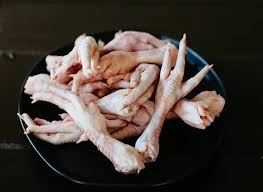
China Chicken Feet Imports 2026 and Volume Forecast Market Value

Introduction
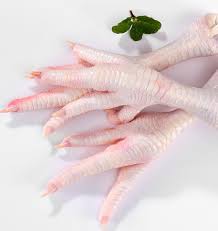
China is unquestionably the world’s largest importer and consumer of chicken feet. This product, often considered a by-product or animal feed in many Western countries, holds a special place in Chinese food culture and is used as a popular ingredient in restaurants, street food, and home cooking. In 2026, China’s chicken feet imports are expected to maintain their upward trajectory. In this article, we provide a precise estimate of China’s chicken feet import and purchase volumes in 2026 and analyze the factors influencing this market.
Expected Chicken Feet Import Volume by China in 2026
Based on Chinese customs data, statistics from the Food and Agriculture Organization (FAO), and reports from reputable research institutions, China has imported between 1.05 and 1.15 million tons of frozen chicken feet annually in recent years. For 2026, given the demand growth trend, improved economic conditions, and increased restaurant consumption, China’s chicken feet import volume is projected to reach a range of 1.18 to 1.25 million tons.
The weighted average of estimates indicates that China’s chicken feet imports in 2026 will be approximately 1.2 million tons, representing a growth of about 4% to 6% compared to 2025. This growth occurs even as domestic chicken feet production in China has increased, yet it still has not been able to close the gap between supply and demand.
Comparison of China’s Chicken Feet Import Volumes (2022–2026)
Year Approximate Import Volume (thousand tons) Annual Growth Rate
2022 980 2.5%
2023 1,020 4.1%
2024 1,080 5.9%
2025 1,140 5.6%
2026 (Forecast) 1,200 5.3%

Financial Value of China’s Chicken Feet Imports in 2026

Given the projected volume and the average import price per ton, the total value of China’s chicken feet imports in 2026 can be calculated.
The average import price of frozen chicken feet at Chinese ports (CIF) in 2025 was approximately $2,300 per ton**. For 2026, considering exchange rate fluctuations, shipping costs, and tariffs, this price is expected to remain in the range of $2,250 to $2,450 per ton.
Therefore, the total value of China’s chicken feet imports in 2026 is estimated approximately as follows:
· Conservative scenario: 1.18 million tons × $2,250 = $2.65 billion**
· Base scenario: 1.20 million tons × $2,350 = $2.82 billion
· Optimistic scenario: 1.25 million tons × $2,450 = $3.06 billion
Thus, the financial value of China’s chicken feet imports in 2026 is estimated at approximately $2.8 to $3.0 billion. This figure makes China by far the world’s largest chicken feet import market.

Main Supplier Countries of Chicken Feet to China in 2026
China relies on several major countries to meet its chicken feet needs. The composition of suppliers in 2026 is forecast as follows:
Exporting Country Approximate Share of China’s Imports Projected Volume (thousand tons)
Brazil 35–40% 420–480
United States 20–25% 240–300
Argentina 12–15% 140–180
Thailand 8–10% 95–120
Other countries (Chile, Belarus, Russia, etc.) 10–15% 120–180
Brazil: The Largest Supplier
Brazil will continue to maintain its top position in chicken feet exports to China. With large poultry processing plants and the necessary sanitary approvals from China’s General Administration of Customs (GACC), the country supplies more than one-third of China’s import needs. Companies such as BRF and Seara are among the main Brazilian exporters.
United States: A Strong Exporter
The U.S. is China’s second-largest supplier of chicken feet. After past bans were lifted and the Phase One trade agreement was implemented, U.S. chicken feet exports to China grew significantly. In 2026, U.S. exports to China are expected to be between 240,000 and 300,000 tons.
Argentina and Thailand
Argentina has expanded its share in the Chinese market through competitive pricing and increased production capacity. Thailand, due to its geographical proximity and product quality, is also considered a reliable supplier for China.
Factors Driving the Increase in China’s Chicken Feet Imports in 2026

Several key factors have contributed to the growth of China’s chicken feet imports in 2026:
· Domestic production gap: China’s domestic chicken feet production is about 3 million tons annually, while domestic consumption is estimated at over 4 million tons. This gap of approximately 1 million tons must be filled through imports.
· Growth in restaurant and traditional fast-food consumption: Dishes like “braised chicken feet in soy sauce” and “spicy chicken feet” are on the menus of thousands of Chinese restaurants. With the economic recovery post-COVID, restaurant consumption has increased.
· Rising purchasing power of the middle class: Chicken feet, as an affordable and collagen-rich snack, have gained popularity among urban consumers.
· E-commerce and online retail: Sales of packaged chicken feet on platforms such as Taobao and JD.com have grown significantly.
· Relatively low tariffs and import policies: To ensure food security and control protein prices, China has kept import tariffs on chicken feet at a reasonable level.
Chicken Feet Purchase Price Trends in China (2026)
The purchase price of chicken feet in the Chinese market is influenced by various factors including seasonality, global prices, exchange rates, and customs policies. In 2026, the wholesale price of imported frozen chicken feet at major Chinese ports (such as Shanghai, Guangzhou, and Tianjin) is estimated as follows:
· Grade A chicken feet (large and intact): $2,500 to $2,800 per ton (CIF)
· Grade B chicken feet (medium): $2,100 to $2,400 per ton
· Retail price in the domestic market: $3,500 to $4,500 per ton (depending on city and quality)
Seasonal fluctuations are significant. Peak demand typically occurs during the Spring Festival (Chinese New Year) in January and February, as well as the Mid-Autumn Festival in September. During these periods, prices can rise by 10% to 15%.
Customs and Sanitary Regulations for Chicken Feet Imports into China
China imposes strict regulations on poultry product imports. All foreign plants must be registered on the GACC (General Administration of Customs of China) approved list. Key requirements include:
· Veterinary health certificate: The exporter must provide a valid health certificate from the country of origin.
· Microbial and drug residue testing: Products must be free of Salmonella, banned antibiotics, and other contaminants.
· Packaging and labeling: Packaging must comply with Chinese standards and bear a Chinese label.
· Quarantine and inspection: Shipments are inspected upon arrival and are destroyed or returned if non-compliant.
In 2026, China is expected to strengthen oversight of cold chain logistics and product traceability. Exporters with robust traceability systems will have a competitive advantage.
Challenges and Risks Facing China’s Chicken Feet Imports
Despite steady growth, China’s chicken feet import market faces certain challenges:
· Avian influenza outbreaks: Any disease outbreak in exporting countries can lead to temporary export suspensions and price increases.
· Trade tensions: Political relations between China and some exporting countries (such as the U.S. and Australia) can affect trade flows.
· Currency fluctuations: A strengthening yuan against the dollar can make imports cheaper, while a weakening yuan increases import costs.
· Competition from alternative protein sources: Increased domestic production of pork and chicken could reduce demand for imported chicken feet.
· Logistics constraints: Refrigerated container and port capacity may be insufficient during peak seasons.
Conclusion and Outlook
China will remain the world’s largest importer and buyer of chicken feet in 2026. The country is projected to import approximately 1.2 million tons of chicken feet worth an estimated $2.8 to $3.0 billion. This import volume reflects China’s structural dependence on foreign supply for this particular product.
For global exporters, China represents a strategic and highly profitable market. However, success requires full compliance with GACC regulations, consistent quality maintenance, and effective management of sanitary and trade risks. The upward trend in China’s chicken feet imports is expected to continue through the end of the 2020s, with import volumes reaching about 1.4 million tons by 2030.
FOR MORE INF CALL US IN
NONADSHOP.COM

PARVISICO.COM


بدون دیدگاه