
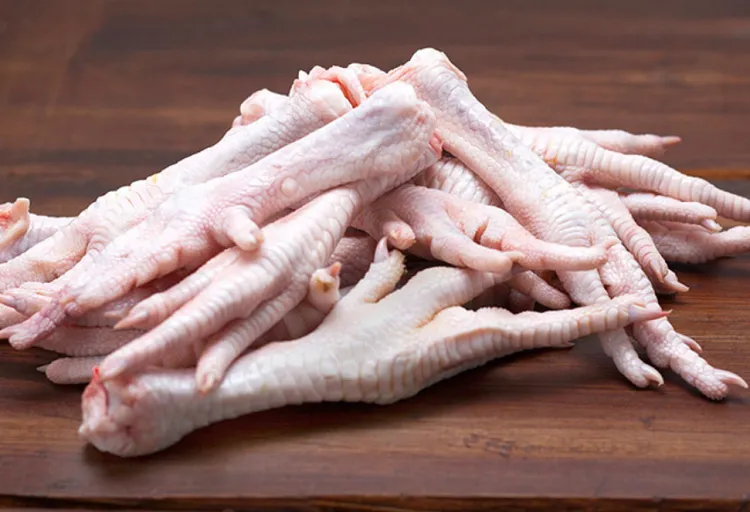
The Role of Reefer Container Shortages in Iran’s Chicken Feet Export Process

Abstract

Chicken feet exports from Iran represent a lucrative trade opportunity, with net profits per 20‑ton container ranging between $800 and $2,500. However, the industry faces a critical logistical bottleneck: recurring shortages of refrigerated (reefer) containers. This article examines the role of reefer container availability in the chicken feet export supply chain, analyzing the causes and consequences of shortages, their impact on export performance, and practical strategies for mitigation. Findings indicate that during peak season (October to February), reefer container availability in southern ports drops from approximately 15% to less than 5%, with daily rental rates on the black market reaching three times the official rate. These shortages lead to shipment delays, cold chain disruption, contract losses, and increased costs. The article provides a comprehensive framework for exporters to manage this risk through early booking, annual contracts, and strategic logistics planning.

. Introduction: The Critical Role of Reefer Containers
Chicken feet, as a highly perishable product, must be transported at a constant temperature of -18°C to maintain quality and safety for human consumption. This requirement makes refrigerated (reefer) containers the only viable option for maritime export . Unlike dry cargo, which can tolerate temperature fluctuations and extended waiting periods, chicken feet begin to deteriorate rapidly if the cold chain is broken.
The importance of reefer containers in the chicken feet export process cannot be overstated. Each standard 40‑foot reefer container can accommodate approximately 1,400 to 1,450 cartons of 20 kg each, totaling around 28 tons of product . Without access to these specialized containers, exports simply cannot proceed, regardless of product quality, pricing, or market demand.
Given Iran’s annual potential production of over 50,000 tons of chicken feet, the availability of reefer containers is a determining factor in the country’s ability to capture export market opportunities .
2. The Nature of Reefer Container Shortages
The peak season coincides with increased demand for refrigerated containers globally, as major agricultural exporting countries ship their produce to international markets. This creates a supply-demand imbalance that particularly affects countries facing sanctions-related shipping restrictions, such as Iran.
2-2. Quantitative Impact
The shortage manifests in several measurable ways:
Rental rates: The daily rental rate for a reefer container on the black market can reach three times the official rate
Booking lead times: Exporters must book containers 2–3 weeks in advance, compared to 1 week in normal conditions
Freight costs: During peak season, reefer container freight from Bandar Abbas to Tianjin can rise by up to 40%
2-3. Geographic Distribution
Reefer container shortages are most acute at Bandar Abbas (Shahid Rajaee Port), which handles approximately 95% of reefer shipping lines serving Iran’s chicken feet exports . The alternative ports face their own limitations:
3. Consequences of Reefer Container Shortages
3-1. Cold Chain Disruption
The most serious consequence of container shortages is the risk of products leaving the cold chain while waiting for a container . Chicken feet that have been properly processed, washed, cooled, and frozen in standard packaging can maintain quality for 12–24 months when kept at -18°C . However, even brief exposure to higher temperatures can:
Promote bacterial growth
Cause freezer burn and quality degradation
Lead to condensation and packaging damage
Result in total shipment condemnation if the cooling system fails mid-voyage
3-2. Delays and Contract Losses
Extended waiting times for containers lead to:
Longer lead times (sometimes 45–60 days instead of 25–30 days for delivery)
Missed delivery deadlines with foreign buyers
Loss of time-sensitive contracts
Reputation damage that can affect future business relationships
3-3. Cost Escalation
Exporters face multiple cost impacts:
Higher freight rates during peak season (up to 40% increase)
Premium payments for black market containers
Additional storage costs for products waiting at the port
Potential financial penalties for late delivery
3-4. Sanctions Interaction
The container shortage problem is compounded by international sanctions, which:
Restrict access to major international shipping lines (MSC, Maersk, COSCO) that do not cooperate directly with Iran
Force exporters to rely on domestic lines (IRISL, SISL, Safiran) or forwarders in third countries (UAE, Turkey)
Add 5–10 days of transit time for transshipment in Dubai or Oman
Increase freight rates by 20–40% compared to global market rates

. Maritime Routes and Reefer Container Availability
4-1. Primary Export Routes
Iranian chicken feet exports primarily use two southern sea corridors:
Persian Gulf to East Asia Route (Busiest):
Origin: Shahid Rajaee Port (Bandar Abbas)
Alternative: Imam Khomeini Port (Khorramshahr)
Destinations: Tianjin (China), Shanghai (China), Ho Chi Minh City (Vietnam), Port Klang (Malaysia), Laem Chabang (Thailand)
Transit time: 14–25 days
Active lines: IRISL, SISL, Safiran, and foreign operators in cooperation with local lines
Gulf of Oman to India & Southeast Asia (Secondary):
Origin: Chabahar
Destinations: Mumbai (India), Karachi (Pakistan), Jakarta (Indonesia)
Transit time: 5–10 days
Challenge: Lack of regular reefer container services; most shipments must be routed through Bandar Abbas
Source:
4-2. Route-Specific Reefer Challenges
The Bandar Abbas–Tianjin direct route, using IRISL or South Shipping Line, remains the most reliable corridor for chicken feet exports . However, it is also the most vulnerable to winter container shortages.

. Mitigation Strategies for Exporters
5-1. Advanced Booking and Planning
The most effective strategy for managing container shortages is proactive planning:
Book reefer containers 2–3 weeks in advance
Sign annual contracts with shipping lines for dedicated reefer quotas
Plan shipments outside peak season (October–February) where possible
Maintain at least two alternative shipping lines per route
5-2. Investment in Cold Chain Infrastructure
Leading exporters are investing in land-based solutions:
Land-based refrigerated trailers for temporary storage at the port area
Backup cold storage facilities at the port to hold product while awaiting containers
Chabahar-focused investment to develop refrigerated infrastructure in this emerging hub
5-3. Operational Best Practices
For successful chicken feet exports, the following technical standards must be maintained:
5-4. Route Diversification
Exporters are increasingly adopting a multi-market strategy:
Primary corridor: Bandar Abbas–Tianjin (China) via direct lines
Secondary corridor: Bandar Abbas–Ho Chi Minh City (Vietnam) with transshipment
Regional corridor: Chabahar–Mumbai (India) for shorter routes
Land routes: To neighboring countries (Turkey, Iraq, UAE)
5-5. Transshipment Hubs
Smart exporters establish transshipment hubs in third countries:
Jebel Ali (UAE) : For consolidation and rerouting
Mersin (Turkey) : For European and Mediterranean access
Singapore : For Southeast Asian distribution
6. Comparative Perspective: Iran vs. Competitors
6-1. Competitive Pricing
Iranian chicken feet are often 10–20% cheaper than competitors FOB Bandar Abbas . This price advantage is driven by:
Low domestic consumption (chicken feet are not popular in Iran)
High production volumes (domestic poultry consumption exceeds 2.5 million tons annually)
True by-product status (feet are not a primary production target)

. Risk Implications
The combination of price advantage and logistical challenges means:
Higher profit margins are achievable but require more sophisticated logistics management
Foreign buyers must accept longer lead times and greater uncertainty
Successful exporters distinguish themselves through proven transshipment routes and cold chain accountability
7. Policy Recommendations
7-1. For Government
Diplomatic efforts: Pursue removal of shipping-related sanctions and direct export protocols
Infrastructure investment: Develop Chabahar’s refrigerated infrastructure
Port efficiency: Reduce congestion at Bandar Abbas through improved operations
Fleet development: Expand Iran’s domestic reefer container fleet
7-2. For Exporters
Early booking: Secure containers 2–3 weeks in advance
Annual contracts: Negotiate dedicated reefer quotas with shipping lines
Cold storage investment: Develop backup storage at ports
Market diversification: Reduce reliance on China by developing regional markets
7-3. For Buyers
Longer lead times: Accept 45–60 days for delivery instead of 25–30 days
Partner selection: Work with exporters who have proven transshipment routes
Price negotiation: Balance lower FOB prices against higher logistics costs
. Conclusion
Reefer container shortages represent a critical bottleneck in Iran’s chicken feet export industry, with severe impacts during the peak season (October–February) when availability drops from approximately 15% to less than 5%. The consequences include cold chain disruption, shipment delays, contract losses, and significant cost escalation through black market premium rates.
Despite these challenges, chicken feet exports from Iran remain highly profitable, with net profits ranging from $800 to $2,500 per container. The key to success lies in proactive management: early booking, annual container contracts, investment in cold storage infrastructure, route diversification, and strategic partnership with experienced logistics providers.
The development of Chabahar as a second major export hub, combined with government efforts to establish direct export protocols with major importers like China, offers promising avenues for reducing dependence on the overloaded Bandar Abbas corridor. However, until these structural improvements materialize, Iranian exporters must navigate the “bitterness” of container shortages through careful planning and operational excellence.
For more info call us
Nonadshop.com



بدون دیدگاه