
Economic Value of Poultry By-products: The Case of Chicken Feet for Export
Abstract
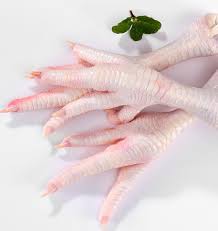
Chicken feet, once considered a low-value poultry waste product, have emerged as a highly lucrative export commodity in global trade. This article examines the economic value of chicken feet as a poultry by-product, with a focus on Iran’s export potential. The global chicken feet market was valued at USD 8,420 million in 2026 and is projected to reach USD 14,043.63 million by 2031, growing at a CAGR of 8.9% . Key importing countries include China, Vietnam, Hong Kong, and Malaysia, where chicken feet are considered a delicacy . Iran has developed a significant chicken feet export industry over the past two decades, leveraging its competitive pricing and growing compliance with international sanitary standards . However, exporters face challenges including sanctions, banking restrictions, and refrigerated container shortages . This article provides a comprehensive analysis of market opportunities, challenges, and strategic recommendations for Iranian exporters.
1. Introduction: Transforming Waste into Wealth
Poultry production generates substantial by-products that can account for up to 30% of total production volume . Chicken feet represent one of the most underutilized yet valuable by-products in this category. While chicken feet are rarely consumed in Western countries and often treated as waste, they are considered a delicacy in many Asian countries and are rich in collagen, minerals, and bioactive compounds .
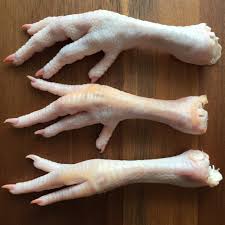
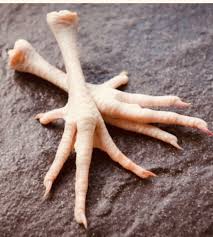
Scientific analysis reveals that chicken feet consist of skin, bones, muscles, and connective tissues, with collagen constituting approximately 30–35% of their composition . This high collagen content makes them valuable not only as food but also for industrial applications including gelatin production, collagen extraction for cosmetics and supplements, and pet food manufacturing .
The transformation of chicken feet from a low-value by-product to a globally traded commodity represents a significant opportunity for poultry-producing countries, including Iran, to generate export revenue while promoting circular economy principles and reducing waste.

2. Global Market Size and Growth
2-2. Key Market Drivers
1. Asia-Pacific Demand: Asia-Pacific dominates global demand, accounting for over half of total consumption due to strong culinary integration in China, Vietnam, and Indonesia .
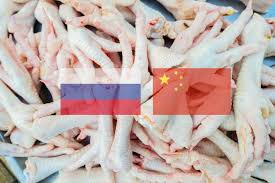
2. China’s Import Volume: China imported approximately 491,000 tons of frozen chicken feet during the first eleven months of 2023 to meet domestic demand . In 2020, China’s import volume reached about 1.3 million tons .
3. Brazil’s Export Success: Brazil earned USD 221 million from chicken feet exports to China in a single year, representing a 9.5% increase over the previous year . In 2023, Brazil exported approximately 185,000 metric tons of chicken feet .
4. Industrial Diversification: Growing use in pet food, collagen extraction, gelatin manufacturing, and nutraceutical production is creating high-value industrial demand .

3. Iran’s Chicken Feet Export Industry
3-1. Production and Market Position
Iran has developed a significant chicken feet export industry over the past two decades . Key characteristics include:
⦁ Production Capacity: Iran has the potential to produce over 50,000 tons of chicken feet annually .
⦁ Supply Capacity: Major Iranian exporters can supply up to 1,000 metric tons per month .
⦁ Competitive Pricing: Iranian chicken feet are priced very competitively due to lower domestic consumption and production costs .

4. Economic Value and Profitability
4-1. Profit Margins
According to industry estimates, the net profit per 20-ton container of exported chicken feet can range between USD 800 and 2,500, depending on exchange rates and shipping costs .
4-2. Price Dynamics
Brazil’s experience illustrates the price appreciation potential:
⦁ Brazilian domestic price per kg reached R$ 14 (approximately USD 2.7) in retail markets .
⦁ Wholesale prices in Brazil increased by 41.3% between 2020 and 2026 .
⦁ Export prices range between USD 1,400-1,800 per ton, depending on grade .
4-3. Value-Added Product Potential
Processed chicken feet products (marinated, ready-to-eat, vacuum-packed) command margins 20-35% above frozen variants . Additionally, industrial applications including collagen extraction offer higher-value opportunities .
5. Challenges Facing Iranian Exporters
5-1. Sanctions and Banking Restrictions
International sanctions present significant challenges:
⦁ Limited Access to Global Shipping Lines: Major operators like MSC, Maersk, and COSCO do not cooperate directly with Iran, forcing reliance on domestic lines or third-country forwarders .
⦁ Increased Freight Costs: Sanctions-related complications increase freight rates by 20-40% compared to global market rates .
⦁ Transshipment Requirements: Cargo often needs transshipment via Dubai or Oman, adding 5-10 days to transit time .
5-2. Reefer Container Shortages
Chicken feet require frozen storage at -18°C, making refrigerated containers essential :
⦁ Normal Season: Approximately 15% of empty reefer containers available in southern ports .
⦁ Peak Season (October-February): Less than 5% availability .
⦁ Black Market Premium: Daily rental rates for reefers can reach 3 times the official rate .
5-3. Market Access Barriers
⦁ China’s Direct Export Restrictions: Currently, direct export of Iranian chicken feet to China is not possible due to strict registration laws, requiring re-export through Hong Kong, Vietnam, or Malaysia .
⦁ Food Safety Standards: China has very strict import requirements, though the Iranian Veterinary Organization has recently obtained certifications accepted by China and Vietnam .

7. Conclusion
The global chicken feet market represents a significant economic opportunity for Iran, with market value projected to reach USD 14 billion by 2031 . Iran’s competitive advantages—including reasonable pricing, growing production capacity, and improving sanitary standards—position the country to capture a larger share of this expanding market.
However, realizing this potential requires overcoming substantial challenges, particularly sanctions-related shipping constraints and reefer container shortages . By diversifying market destinations, pursuing direct access to China, developing value-added products, and strengthening quality assurance, Iranian exporters can enhance profitability and establish a sustainable presence in the global chicken feet trade.

For more info in touch with us
In
Nonadshop.com
Parvisico.com

بدون دیدگاه