

US Chicken Feet Export Revenue 2026 and America Commercial Role in the Global Chicken Feet Market
Introduction
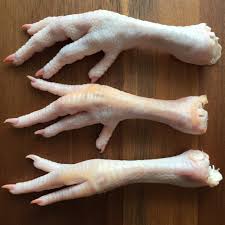
Chicken feet exports have become one of the most profitable segments of the global poultry trade. While domestic consumption of this product is negligible in many Western countries, there is massive demand in Asia, particularly China. The United States, as the world’s second-largest exporter of chicken feet, plays an important role in this market and earns significant revenue from exporting this by-product. In this article, we examine the commercial and revenue role of chicken feet exporting countries, with a special focus on the United States.

Economic Importance of Chicken Feet Exports Worldwide
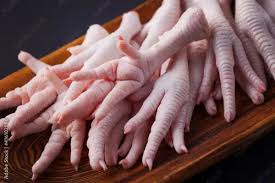
In many poultry-producing countries, especially in North America and Europe, chicken feet are considered a low-value by-product or even waste. However, in Asian markets, this product has become a high-value commodity. This cultural and market difference has created a significant opportunity for exporting countries to earn substantial foreign exchange from a product that would otherwise be discarded.
In 2026, the total value of global chicken feet trade (exports) is estimated at approximately $3.5 to $4 billion. This figure demonstrates that chicken feet have evolved from a marginal product into a strategic commodity in international poultry trade.
Largest Chicken Feet Exporting Countries and Their Revenues in 2026
A few major countries control almost the entire global chicken feet export market. The table below shows estimated export volumes and values for these countries in 2026:
Exporting Country Export Volume (thousand tons) Approximate Export Value (million USD) Global Market Share
Brazil 450–500 1,100–1,250 35–40%
United States 280–320 700–800 22–25%
Argentina 140–170 320–400 11–13%
Thailand 90–120 200–280 7–9%
Others (Chile, Belarus, Russia, etc.) 120–150 250–350 10–12%
Brazil remains the market leader, but the United States holds a close second place and may approach the top spot in some years.
The United States: A Special Position in Chicken Feet Exports
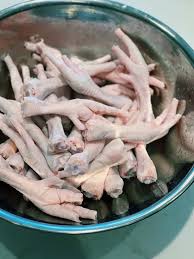
The United States is one of the world’s largest chicken meat producers, producing over 20 million tons of chicken meat annually. As a by-product of this massive production, chicken feet are available in significant volumes. However, domestic consumption of chicken feet in the U.S. is very low; therefore, almost all American-produced chicken feet are exported to foreign markets.
US Chicken Feet Export Volume and Value in 2026
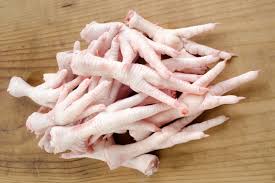
Based on data from the U.S. Department of Agriculture (USDA) and customs statistics, the United States is projected to export approximately 280,000 to 320,000 tons of frozen chicken feet in 2026. With an average export price of about $2,300 to $2,500 per ton (FOB), the total value of U.S. chicken feet exports in that year will reach approximately $700 to $800 million.
This figure represents a significant share compared to other U.S. poultry product exports (such as chicken breast, wings, and paws), demonstrating that chicken feet have become an important source of foreign exchange earnings for the U.S. poultry industry.
Main Destinations for U.S. Chicken Feet Exports

The most important target markets for U.S. chicken feet exports in 2026 are:
Destination Country Approximate Share of U.S. Exports Characteristic
China 60–70% Largest buyer with stable demand
Hong Kong 8–12% Re-distribution hub to China and Asia
Vietnam 5–8% Growing Southeast Asian market
Philippines 3–5% Increasing demand
Mexico 2–4% Nearby market with low transport costs
Others 5–10% Including South Korea, Thailand, etc.
China is by far the primary destination for U.S. chicken feet exports. Following the Phase One trade agreement between the U.S. and China in 2020, U.S. chicken feet exports to China increased dramatically, and this trend has continued in subsequent years.
Competitive Advantages of the United States in Chicken Feet Exports
The United States has several key competitive advantages that make it one of the main players in the global chicken feet market:
· High production volume and supply stability: With annual production of over 20 million tons of chicken, the U.S. can regularly supply significant volumes of chicken feet.
· Strong sanitary standards: The FSIS inspection system is one of the most credible food safety oversight systems in the world and builds trust with foreign buyers.
· Advanced cold chain: Freezing and refrigerated transport infrastructure in the U.S. is highly developed, preserving product quality along the route.
· Competitive pricing: Despite high production costs, economies of scale and supply chain efficiency keep U.S. chicken feet prices competitive.
· Trade relations and bilateral agreements: The Phase One trade agreement with China ensures U.S. access to the world’s largest chicken feet market.
Major U.S. Chicken Feet Exporting Companies
Several large poultry processing companies in the United States control the bulk of chicken feet exports:
· Tyson Foods: The largest chicken meat producer in the U.S. and a major exporter of chicken feet.
· Pilgrim’s Pride: The second-largest producer with significant exports to Asia.
· Sanderson Farms: Another large company focused on by-product exports.
· Perdue Farms: Active in Asian markets with high-quality products.
· Mountaire Farms: A growing exporter to China and Southeast Asian markets.
Revenue Generation and Share of Chicken Feet in Total U.S. Poultry Exports
Chicken feet exports account for a significant share of the U.S. poultry industry’s foreign exchange earnings. In 2026, total U.S. poultry product exports (including chicken meat, turkey, eggs, and by-products) are estimated at approximately $5.5 to $6 billion. Of this amount, chicken feet exports valued at around $700 to $800 million represent about 12% to 14% of total U.S. poultry export revenue.
This high share shows that chicken feet are no longer a marginal product but have become one of the revenue pillars of the U.S. poultry industry. Interestingly, in some years, U.S. chicken feet export revenue has exceeded that of chicken breast exports because Asian demand for chicken feet is very high, and its price in foreign markets is substantial.
Comparison of U.S. Export Revenue with Other Major Exporters
To better understand the U.S. position, it is useful to compare it with other major exporters:
Brazil: Market Leader
Brazil is the world’s largest chicken feet exporter, shipping about 450,000 to 500,000 tons annually. Brazil’s export revenue from this product is about $1.1 to $1.25 billion. Due to lower production costs (especially cheap animal feed) and strong trade relations with China, Brazil has been able to capture a larger market share.
Argentina: Emerging Competitor
Argentina, with exports of approximately 140,000 to 170,000 tons and revenue of $320 to $400 million, is the third-largest exporter. The country is expanding its share in the Chinese market through competitive pricing and increased production capacity.
Thailand: Regional Player
Thailand, with exports of 90,000 to 120,000 tons and revenue of $200 to $280 million, primarily targets Southeast Asian and Chinese markets. Geographic proximity to China is an important advantage for Thailand.
Comparative Table
Indicator Brazil United States Argentina Thailand
Export volume (thousand tons) 475 300 155 105
Export value (million USD) 1,175 750 360 240
Global market share 37% 24% 11% 8%
Main advantage Low production cost High sanitary standards Competitive pricing Geographic proximity
Challenges and Opportunities for U.S. Chicken Feet Exports
Challenges
· Trade tensions with China: Tense political relations between the U.S. and China can lead to additional tariffs or import restrictions, affecting U.S. chicken feet exports.
· Intense competition from Brazil: Brazil offers more competitive prices due to lower costs and may reduce the U.S. share.
· Poultry diseases: Outbreaks of avian influenza in the U.S. could halt exports and cede the market to competitors.
· Currency fluctuations: A strengthening U.S. dollar can make U.S. chicken feet more expensive in foreign markets and reduce competitiveness.
Opportunities

· Growing demand from China: With rising consumption and a growing middle class, Chinese demand for chicken feet continues to increase.
· Market diversification: The U.S. can develop new markets such as Vietnam, the Philippines, Indonesia, and Africa.
· Logistics and technology improvements: Investment in traceability and cold chain technologies can create competitive advantages.
· New trade agreements: Trade negotiations with Asian countries could provide access to more markets.
Conclusion


بدون دیدگاه