
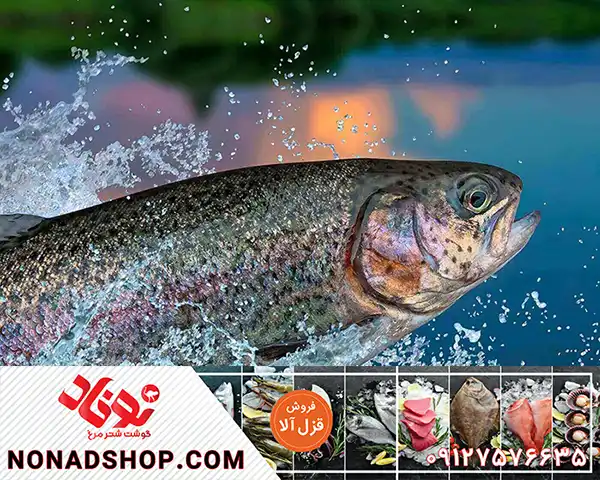
Mazandaran: The Beating Heart of Iran’s Salmon Exports and the Gateway to Global Markets
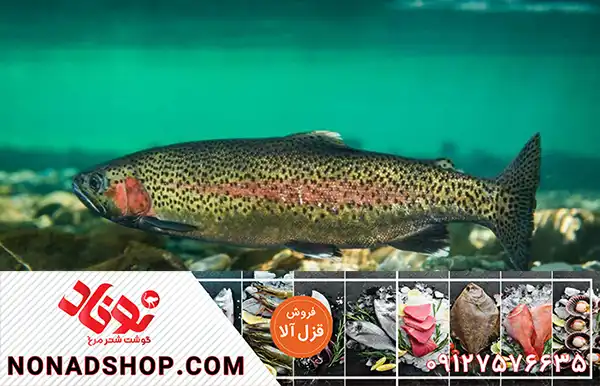
Iran’s aquaculture industry has witnessed a remarkable leap in recent years, and in this arena, Mazandaran Province — drawing on its natural blessings, modern infrastructure, and skilled workforce — has become the undisputed leader in the production and export of farmed salmon. In this article, we examine the pivotal role of this northern province in boosting the volume and quality of Iran’s salmon exports and demonstrate why Mazandaran is the premier choice for international suppliers and buyers.
Why Mazandaran? An Ideal Foundation for Salmon Farming
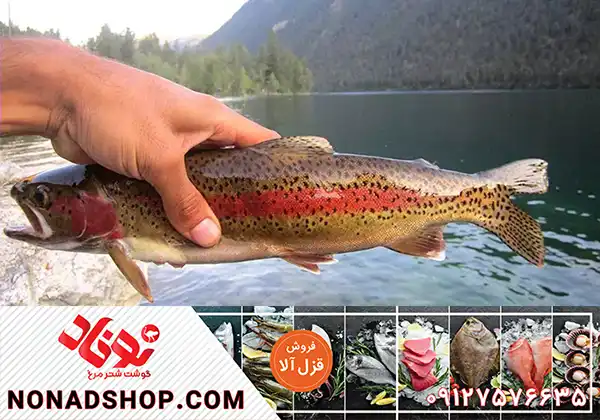
Mazandaran’s success in the salmon industry is no accident. The province possesses a unique set of competitive advantages that have made it the country’s hub for cold-water fish production:
-
Rich and Sustainable Water Resources: The slopes of the Alborz Mountains and the roaring rivers flowing toward the Caspian Sea provide a source of fresh, cool, and oxygen-rich water. The ideal water temperature (between 10 and 15 degrees Celsius) for most of the year creates unparalleled natural conditions for the growth of Atlantic salmon.
-
Temperate Caspian Climate: Unlike many fish-farming regions worldwide, Mazandaran is spared from extreme temperature stress. This climatic stability reduces the stress on the fish and improves the Feed Conversion Ratio (FCR).
-
Skilled Workforce and Indigenous Knowledge: Generations of fishing and aquaculture experience in the region have been blended with modern fisheries engineering knowledge from the country’s leading universities, cultivating a specialized and efficient workforce.
From Traditional Ponds to Smart Farms: The Technological Revolution in Mazandaran
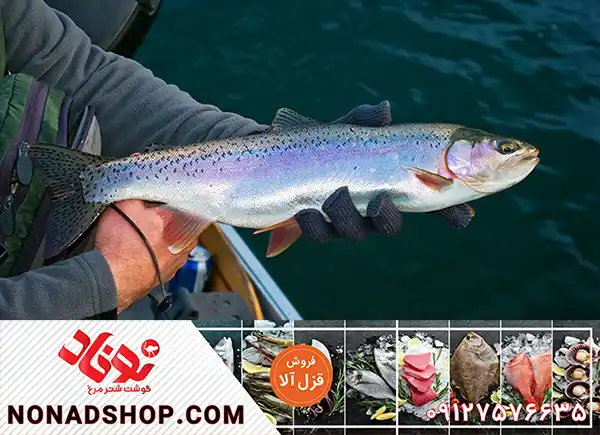
The dramatic increase in Iran’s salmon export volume owes much to a fundamental transformation in Mazandaran’s production infrastructure. Major private-sector investments and government support have led to the emergence of state-of-the-art super-modern farms across the province:
-
Recirculating Aquaculture Systems (RAS): Today, the most advanced RAS farms in the Middle East are located in Mazandaran. These systems, through continuous water treatment and recirculation, reduce water consumption by up to 99%, allow complete control of biological parameters, and fully protect the fish from environmental diseases. The result is the production of a completely healthy salmon, raised without antibiotics and with a uniform quality year-round.
-
Automation and Smart Monitoring: Internet of Things (IoT) sensors, automated feeding systems, and 24/7 monitoring track the health and behavior of the fish every moment. This precision allows the producer to optimize the feeding program and deliver fish with the exact weight, fat content, and color desired by the target market (for instance, the pink-orange fillets preferred in Japan or Europe).
-
Integrated Cold Chain: From the moment of harvest to final packaging, the fish enters the processing cycle in under four hours. Processing units in Mazandaran are equipped with Individual Quick Freezing (IQF) tunnels and Modified Atmosphere Packaging (MAP), preserving the product’s freshness until it reaches the most distant destinations.
Quality Assurance: The Key to Trust in Global Markets
Increasing export volume is not achieved by increased production alone; what opens the doors to demanding markets is uncompromising adherence to international standards. Farms and processing plants in Mazandaran have secured the following certifications, reassuring foreign buyers about the quality and safety of the product:
-
Food Safety Certifications: ISO 22000 and HACCP, which guarantee the control of critical points throughout the production chain.
-
Sustainability and Ethical Practice Certifications: Membership in and approval from the ASC (Aquaculture Stewardship Council) and GlobalG.A.P., demonstrating a commitment to responsible production, environmental protection, and workers’ rights. These standards are mandatory for entry into European Union markets.
-
Halal Certificate: Paving the way for exports to Islamic countries.
-
Full Traceability: Every export package of Mazandaran salmon carries a digital identity. By scanning a QR code, the buyer can access information on the source of the eyed eggs, the date and type of feed used, administered vaccines, the exact harvest date, and the transportation route.
Mazandaran’s Role in Numbers: The Engine of Export Growth
Mazandaran’s share of the country’s fisheries exports, particularly cold-water fish, tells a story of remarkable success. With over 50% of the nation’s farmed salmon production capacity, the province has transformed Iran from a net importer into a serious player in the export arena. Mazandaran’s farms consistently dispatch their air and sea shipments to destinations such as:
-
Northern neighboring countries (Russia and Eurasia)
-
Gulf Arab states (UAE, Qatar, Oman)
-
Emerging East Asian markets (South Korea, China)
-
And even the competitive markets of Eastern Europe
This quantitative growth has never come at the expense of quality. Positive feedback from importers regarding the mild flavor, firm texture, and rich, fatty fillets of Mazandaran salmon is a testament to this fact.
Challenges and Future Outlook: Cementing Iran’s Name on the Global Salmon Map
Despite all its achievements, Mazandaran’s aquaculture community is not resting on its laurels. Future plans to maintain and increase market share include:
-
Developing a Local Eyed-Egg Bank: Reducing dependence on egg imports from Europe and breeding more resilient strains better adapted to Iran’s climate.
-
Collective Branding: Creating a unified origin brand under the name “Mazandaran Salmon” for more effective penetration into global markets and to prevent destructive internal competition.
-
Value-Added Product Development: Moving from the sale of whole frozen fish toward the production of skin-packed fillets, hot- and cold-smoked salmon, ready-to-cook steaks, and ready-to-eat meals for modern retail.


بدون دیدگاه