
Iranian Caviar: Everything a Foreign Buyer Needs to Know
If, as a foreign trader or importer, you have your sights set on the Iranian caviar market, before taking any action you must familiarize yourself with three fundamental pillars of this trade: the types of Iranian export caviar, lessons from the experience of seasoned Iranian exporters, and practical tips that will guarantee your success. In this article, we have compiled all of this for you in straightforward, actionable language.
Why Iranian Caviar? Iran’s Position in the Global Market
With an annual production of over 25 tons of farmed caviar, Iran is one of the major players in this global industry. An attractive point for foreign buyers is that Iranian caviar commands the highest average unit price in the world market — a sign of superior quality and the prestige of the Iranian brand among luxury consumers. Yet Iran holds only about 1% of global export volume, meaning the growth potential for foreign traders who enter into partnership with Iranian suppliers today is enormous.
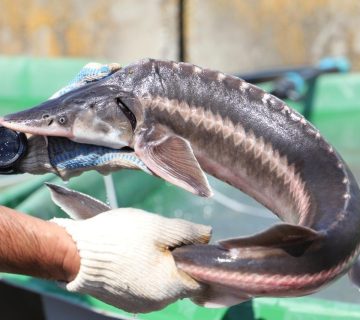
All Iranian export caviar today is farm-raised, with sturgeon being cultivated in earthen and concrete ponds along the Caspian coast, in the desert, and even in mountainous provinces. This means your trade will be fully compatible with CITES requirements and European Union regulations.

Types of Iranian Export Caviar: From Species to Grade
An exact understanding of the species and export grades is the first step toward a secure purchase. Iranian suppliers generally offer the following classification:
-
Beluga Caviar (Huso huso)
-
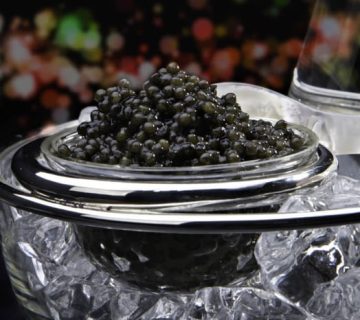
Grains: The largest among all species, ranging from light gray to dark, almost black.
-
Flavor: Buttery, delicate, and very soft on the palate; famously known as “black pearl.”
-
Export grades: Imperial (the most golden and lightest), Royal, and standard export grade.
-
Suggested markets: Europe, the USA (via Dubai), China, and luxury-preferring Arab countries.
-
Osetra Caviar (also known as Asetra – Acipenser gueldenstaedtii)
-
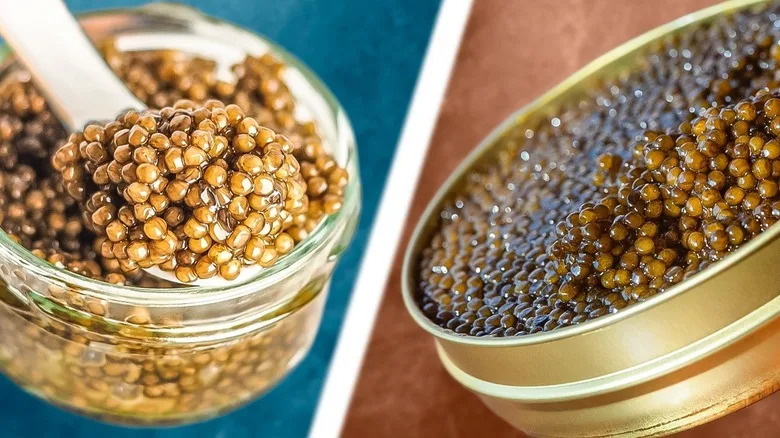
Grains: Medium to large, with a color spectrum ranging from golden brown to dark olive.
-
Flavor: Complex, with a nutty aftertaste and a slight saltiness; a favorite choice of connoisseurs.
-
Special type: “Imperial Osetra” with highly prized golden grains.
-
Suggested markets: Japan, South Korea, and European restaurants with discerning clientele.
-
Sevruga Caviar (Acipenser stellatus)
-
Grains: Smaller than Beluga and Osetra, gray to black in color.
-
Flavor: Stronger, saltier, with an aroma of the sea; suitable for traditional palates.
-
Suggested markets: Russia, CIS countries, and traditional Middle Eastern markets.
-
Siberian Caviar (Baerii – Acipenser baerii)
-
Grains: Small to medium, glossy black.
-
Flavor: Mild, earthy, and slightly sweet; popular in the mid-range luxury segment.
-
Trade advantage: More affordable price and shorter farming cycle ensure consistent supply.
-
Suggested markets: Eastern Europe, China, and specialty food chain stores.
Golden tip for buyers: Always request from your supplier a “product analysis sheet” containing the species, fish age, grade, salt percentage (usually 2.8% to 3.5%), and packaging date.
Experiences of Iranian Export Traders: Lessons Drawn from the Heart of the Market
In conversations with several experienced Iranian exporters, a few key insights emerged that can smooth your path:
-
“Nothing replaces trust”
Mr. Rezaei, a caviar exporter to Europe with 15 years of experience, says: “With our first shipment to a German client, 20% of the consignment was damaged due to temperature fluctuations at Doha airport. We immediately sent a replacement shipment at our own expense. Today, that same client is our largest buyer. Honesty in the first crisis builds trust forever.”
-
“The CITES permit is like the caviar’s passport”
Ms. Moradi, active in the UAE and Oman market, emphasizes: “Without the CITES tracking code, don’t even think about Dubai customs. Once we sent a trial shipment without accurately entering the species code on the permit; the consignment sat in customs for 45 days and was eventually returned. It was a huge loss. Now, for every shipment, a legal expert checks the permits.”
-
“Packaging is your first salesperson”
Mr. Hassani, who exports Iranian caviar to Japan and Korea, says: “When the Japanese buyer saw the lacquered wooden box with a special emblem, he said, without even tasting the product: ‘This is exactly what my customers expect.’ We sold it at 15% above competitors’ prices, solely because of the packaging.”
-
“Don’t underestimate transportation”
The operations team of a company exporting to China considers this point vital: “On an air freight shipment to Shanghai, due to a 6-hour flight delay, the container temperature rose above 4°C. Since that day, we only contract with airlines that provide active temperature-controlled containers with online data loggers, and we station our own technical staff at both origin and destination.”
-
“Banking relationships are the master key to trade under sanctions”
An exporter working with Russia explains: “After SWIFT restrictions, we used an exchange house in Turkey to settle in rubles. A few months later, that exchange house froze our account. Now we work through a coordination company in Oman that settles in Tether (USDT) cryptocurrency. But this method requires a lawyer and precise contracts.”
Key Points for Success in Iranian Caviar Export
If you, as a foreign buyer, want to establish a stable and profitable partnership with Iranian suppliers, always keep this checklist at hand:
-
Choose the Right Partner with Utmost Care
-
Request a product sample from the supplier and have it tested in a reputable European or Asian laboratory.
-
Verify the company’s export track record; ask for customs receipts from previous shipments or a letter of endorsement from current clients.
-
Visit the farm and processing workshop at least once (even via live video call).
-
Treat the Cold Chain as Sacred
The correct storage and transport temperature for caviar is -2 to 0 degrees Celsius.
-
Never allow the shipment to break out of the cold chain.
-
Use USB or online data loggers for real-time temperature monitoring.
-
Don’t forget a comprehensive spoilage insurance policy.
-
Personally Verify the Permits
-
CITES: Check the permit code on the CITES system.
-
Veterinary Health: The official version must bear the stamp of the Iran Veterinary Organization.
-
Halal Certificate (for Islamic markets).
-
If the destination is Europe, the EC Approval Number of the processing workshop must be printed on the packaging.
-
Design a Secure Payment Method
Due to sanctions, the following options are common:
-
Transfer through intermediary exchange houses in the UAE, Turkey, Iraq, or Oman.
-
Cryptocurrency (Tether, Bitcoin) in full compliance with your local laws and after drawing up a formal contract accepting this method.
-
A Special Purpose Vehicle (SPV) in a third country that purchases the shipment from Iran and sells it to you. In this case, your payment goes to the SPV’s account.
-
Customize Packaging for the Target Market
-
Europe and the USA: Matte metal tins with minimalist design and transparent information.
-
China and East Asia: Wooden or leather gift boxes with red and gold colors.
-
Arab countries: Royal packaging with Islamic design elements and the Halal logo.
-
Choose Your Market Wisely
If you are a newcomer
-
Start with the UAE (Dubai): the smoothest logistical, banking, and legal route.
-
Then move to Eastern Europe or Central Asian countries, where competition is lower.
-
Finally, enter Western Europe and Japan, which offer higher profits but also higher sensitivity.
-
Draft a Professional Contract
The contract must include these clauses:
-
Exact product definition (species, grade, grain size, salt percentage).
-
Shipping terms (specified Incoterms, preferably FCA or CPT).
-
Payment terms (percentage of advance payment, payment against documents).
-
Quality guarantees and compensation procedures in case of non-conformity.
A Clear Path to a Profitable Trade
Iranian caviar is one of the rare luxury goods that offers both a high profit margin and a completely legal, sustainable supply. As a foreign buyer, the secret to your success lies in diligence in selecting an Iranian partner, meticulous attention to the cold chain, and creativity in designing the payment method.
The experience of Iranian exporters shows that the caviar market is not a short-term business, but a long-term relationship founded on trust and quality. If you lay the groundwork for this relationship correctly, you will reap its rewards for years to come.
Important Legal Warning: Importing or exporting caviar without a valid CITES permit is a crime in all countries and carries severe criminal and financial penalties. Before taking any action, make certain of the authenticity of the supplier’s documents.
Ready to start a successful cooperation? Contact our specialists to receive a list of verified suppliers and expert consultation
CAVIAR OF IRAN VERY GOOD EXPORT SUPPLY FOR SEND TO ALL COUNTRY THAT NEED OUR SERVICE
NONADSHOP COMPANY

بدون دیدگاه