

Government Support in Enhancing Iranian Salmon Exports

Abstract
Iran’s fisheries sector has demonstrated remarkable growth, with exports reaching $372 million in 1403 (ending March 2025) and surging to over $700 million in the following period—a 40% increase. While salmon is not currently among Iran’s primary exported species, government support mechanisms documented for the broader fisheries sector provide a clear roadmap for developing salmon exports. This article examines the role of government backing—including infrastructure investment, research funding, low-interest loans, and policy reforms—in expanding Iran’s aquaculture sector, with specific recommendations for salmon export development based on existing support frameworks.

1. The Strategic Importance of Government Support for Aquaculture

1-1. Why Government Support Matters
Government support is critical to Iran’s fisheries sector, which provides direct employment for approximately 300,000 people and indirect employment for one million more. The sector has been identified as a pillar of sea-based economic development, with the Seventh National Development Plan emphasizing a marine-oriented economy and setting clear production targets.
The plan aims to increase fisheries production from the current 1.4 million tons to 1.8 million tons, outlining more than 150 seafood industry-related projects with a total investment of $42.5 million. This framework provides the foundation for targeted support of high-value species like salmon.
1-2. From General Fisheries to Salmon-Specific Support
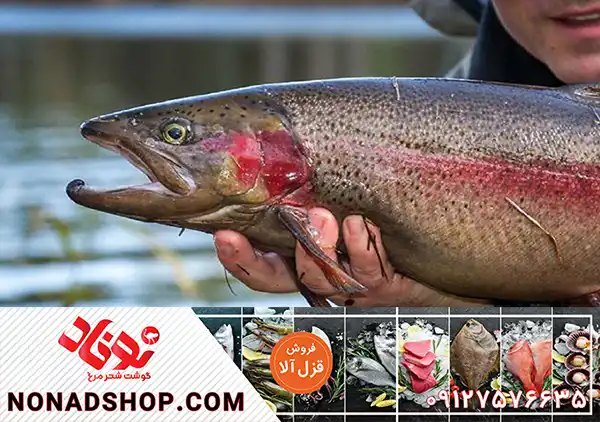
Research conducted in Iran has explicitly identified “producing Salmon for export in good packaging” as a recommended strategy for fisheries development. This recognition reflects growing awareness of salmon’s export potential and the need for systematic government backing to realize this opportunity.
2. Key Government Support Mechanisms
2-1. Research and Development Funding
The Iranian Fishery Science Research Institute has initiated 17 high-priority fishery research projects aimed at boosting productivity and developing domestic aquaculture technologies. These projects, selected from 345 proposals, focus on:
Total estimated cost: 1.23 trillion rials (approximately $2.46 million)
**Critical Gap:** Only 25% of the initial budget has been secured, prompting calls for state-run companies, banks, and government-affiliated institutions to allocate at least 60% of their research budgets to the fishery sector.
2-2. Financial Support for Producers
The Iran Fisheries Organization (IFO) has implemented reforms including **providing low-interest loans** to support fisheries and expand fish farming operations. These financial mechanisms are essential for:
– Modernizing existing farms
– Establishing new salmon farming operations
– Investing in processing and packaging facilities
– Adopting advanced breeding techniques
2-3. Infrastructure Development
Government investment in infrastructure to support marine fishing activities has been identified as a key driver of export growth. In Khuzestan province, for example, new docks have been inaugurated and fishermen’s problems resolved. The government is also focusing on:
– **Expanding cage aquaculture** in offshore waters
– **Developing ports and facilities** for the fisheries sector
– **Strengthening cold chain infrastructure** for product quality preservation
2-4. Maritime Diplomacy and Market Access
The government has formed joint committees in the maritime domain with countries that have capacity, especially African and neighboring countries. The main goal of these negotiations is to strengthen maritime relations and cooperation. Additionally, the government is:
– Completing necessary protocols for fishery product exports with relevant countries
– Developing export and processing of marine products as a policy priority
2-5. Production Targets and Incentives
Under the Seventh National Development Plan, clear production targets have been set for the fisheries sector. Key targets include:
– Doubling aquaculture production from 1.3 million tons to 2.6 million tons by 2025
– Increasing fish production from 1.4 million tons to 1.8 million tons
– Reaching shrimp production of 60,000 tons in 2026

3. Current Status of Iranian Aquaculture Exports
3-1. Export Growth
Iran’s fishery exports have shown strong momentum:
3-2. Export Destinations
China, Iraq, and the United Arab Emirates (UAE) emerged as the top three destinations for Iranian fishery products. Shrimp, tuna, and carp together constitute a substantial 64% of total export volume and 65% of overall export value.
4. A Roadmap for Salmon Export Development
Based on existing government support frameworks, the following roadmap is proposed for developing salmon exports from Iran:
Step One: Secure Research and Development Funding
– **Priority Action:** Advocate for targeted research on salmon farming technologies suited to Iranian conditions
– **Mechanism:** Utilize the existing provision requiring state-run companies and banks to allocate at least 60% of their research budgets to the fishery sector
– **Proposed Tariff:** Implement a targeted tariff of 0.5% on value added from fisheries exports and processing to generate approximately $20 million to support strategic research
Step Two: Access Low-Interest Loans and Financial Support
– **Priority Action:** Establish specialized salmon farming loan programs through the IFO’s existing low-interest loan framework
– **Target Areas:** Farm modernization, hatchery development, feed production, and processing facilities
– **Expected Outcome:** Reduction in production costs and increased competitiveness in export markets
Step Three: Develop Cage Aquaculture Infrastructure
– **Priority Action:** Prioritize offshore cage farming for salmon production
– **Support Needed:** Government investment in cage infrastructure, citing the urgency for timely budget allocations recognized by fisheries officials
– **Production Target:** Build upon the existing plan for 500,000 tons of fish breeding in the sea by 2025
Step Four: Pursue Value-Added Processing and Packaging
– **Priority Action:** Establish modern processing and packaging facilities for exported salmon
– **Research Support:** Leverage findings that recommend “good standard packaging for export” and “producing Salmon for export in good packaging”
– **Quality Standards:** Pursue advanced certifications such as Aquaculture Stewardship Council (ASC) standards, as already being implemented in the shrimp sector
Step Five: Expand Market Access Through Government Diplomacy
– **Priority Action:** Target European and Asian markets where Iranian seafood is already accepted
– **Government Role:** Complete export protocols through joint committees with target countries
– **Diversification:** Balance strategy between maintaining existing markets and expanding to new destinations
Step Six: Apply Existing Production Goals to Salmon
– **Priority Action:** Set specific production targets for salmon within the Seventh National Development Plan framework
– **Leverage:** Use the existing structure of 150+ seafood industry projects worth $42.5 million to allocate resources to salmon-specific initiatives
– **Coordination:** Ensure salmon development aligns with the government’s policy of completing the fishery value chain
5. Recommendations for Policymakers
5-1. Financial and Institutional Support
1. **Allocate research funds** to salmon-specific projects, implementing the 60% budget provision recommended by fisheries research officials
2. **Expand low-interest loan programs** for salmon farming and processing operations
3. **Complete export protocols** with target countries, especially in Europe and Asia
5-2. Infrastructure Development
1. **Invest in cage aquaculture infrastructure** for salmon, building on existing plans for offshore farming
2. **Develop cold chain facilities** to preserve product quality during export
3. **Establish processing and packaging units** specifically designed for salmon exports
5-3. Market Development
1. **Support branding initiatives** to establish Iranian salmon as a quality product
2. **Provide export incentives** consistent with shrimp export support
3. **Facilitate participation in international seafood exhibitions** to connect with buyers

6. Conclusion
Government support has been instrumental in Iran’s fisheries sector growth, with exports surging from $372 million in 1403 to over $700 million—a 40% increase. While salmon currently represents an untapped opportunity, the existing government support mechanisms provide a ready framework for development.
Research has already identified salmon as a promising export product. By applying the same government backing that has driven shrimp and tuna success—research funding, infrastructure investment, low-interest loans, and diplomatic market access—Iran can develop a competitive salmon export industry.
The Seventh National Development Plan’s emphasis on a marine-oriented economy, the 150+ fisheries projects already planned, and the growing international demand for seafood create a favorable environment for salmon export development. With sustained government commitment and strategic implementation of existing support mechanisms, salmon can become the next major success story in Iran’s fishery export portfolio.
FOR MORE INFO AND TEAMMATE WORK WITH OUR TEAM TOUCH IN
NONADSHOP.COM




بدون دیدگاه