
Determinants and Trade Potentials of Iran’s Shrimp Exports to the European Union: Application of a Gravity Model

Abstract

This article examines the determinants and trade potential of Iran’s shrimp exports to the European Union using the gravity model framework—a widely applied methodology in international trade analysis. Research findings indicate that per capita GDP of importing countries and Iran’s exchange rate positively influence shrimp exports, while Iran’s per capita GDP, geographical distance, importers’ exchange rates, and sanitary regulations have significant negative effects. Spain demonstrates the highest trade success with fourfold utilization of available export capacities, while Germany shows the lowest success in using existing capacities. The article also addresses structural barriers including banking system inefficiencies, sanctions, and high EU tariffs (12%) compared to competitors with zero or reduced tariffs, while highlighting emerging opportunities through sustainability certifications such as ASC. A strategic roadmap for Iranian exporters includes prioritizing Southern European markets, obtaining international certifications, and leveraging the diversification effect of sanctions toward Asian markets while maintaining European market presence.

1. Introduction: The Importance of the European Market for Iranian Shrimp
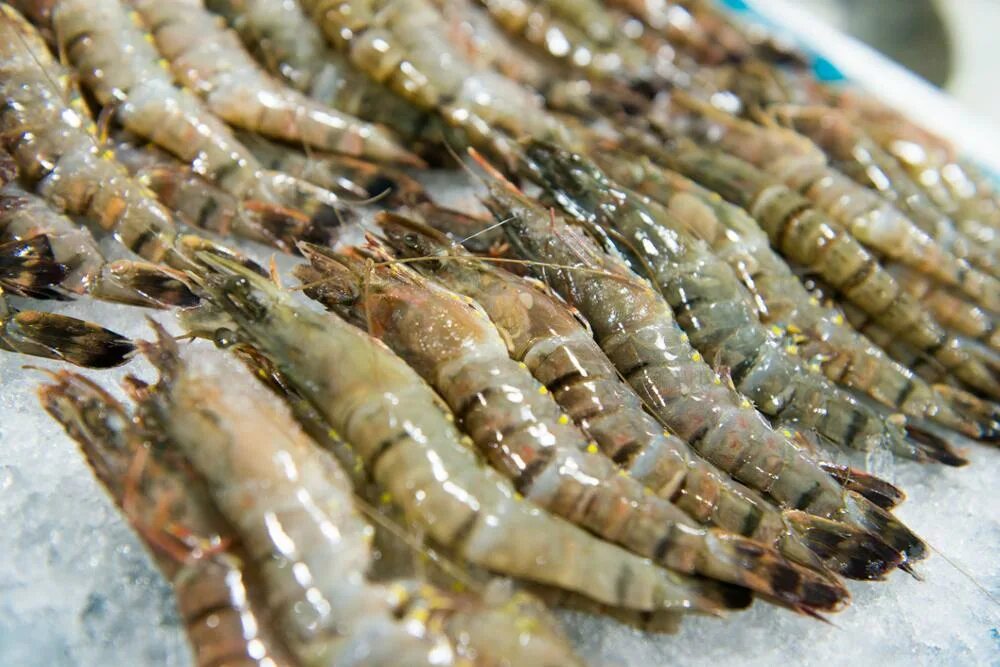
Iran’s shrimp industry has experienced significant growth, with annual production projected at approximately 50,000 tons, of which only about 3,000 tons are consumed domestically—with the remainder destined for export markets . Iranian shrimp exports currently reach Persian Gulf countries, Russia, CIS nations, and European markets, with the European Union representing a high-value but challenging destination .
According to a comprehensive study conducted by researchers at Tarbiat Modares University, Iran’s shrimp exports to EU member countries were analyzed using both standard and augmented gravity models over the period 1991-2011 . This research provides critical insights into the factors that determine Iran’s shrimp export performance and identifies which European markets offer the greatest untapped potential.
The European Union remains an attractive market despite significant barriers because European consumers command higher purchasing power and are willing to pay premium prices for quality seafood products. However, Iran faces substantial challenges in penetrating this market, including a 12% import tariff (compared to 0% for Ecuador and 2.8% for India), stringent sanitary and phytosanitary standards, and banking restrictions due to sanctions .
. The Gravity Model: Theoretical Framework
2-1. Foundations of the Gravity Model
The gravity model is one of the most empirically successful frameworks in international economics, drawing its name from Newton’s law of universal gravitation. In its basic form, the model posits that bilateral trade flows between two countries are positively related to their economic sizes (GDP) and negatively related to the distance between them .
2-2. Applications to Iranian Shrimp Exports
In the context of Iran’s shrimp exports to the EU, researchers have utilized both standard and augmented gravity models. The standard model examines the impact of economic size and distance, while the augmented version incorporates additional variables such as sanitary regulations and exchange rates .
Research on Iran’s seafood exports using the Stochastic Frontier Gravity (SFG) model has confirmed the suitability of this approach for analyzing Iran’s seafood trade with 32 trading partners over the period 2001-2018 . The findings confirmed that Iran has substantial export potential to its trading partners, particularly neighboring countries, though the EU market remains strategically important for value-added exports .

Determinants of Iran’s Shrimp Exports to the EU
3-1. Positive Determinants
**Per Capita GDP of Importing Countries**
Research findings indicate that the per capita GDP of importing countries has a significant positive influence on Iran’s shrimp exports . This aligns with economic theory: wealthier nations have greater purchasing power and higher demand for seafood products. EU countries, being predominantly high-income economies, offer favorable conditions for Iranian shrimp exports.
The positive impact of importers’ income on seafood exports has been confirmed in multiple studies . Higher GDP of trading partners leads to greater demand for imported seafood products, including shrimp.
**Iran’s Exchange Rate**
Iran’s exchange rate has been found to have a positive impact on shrimp exports . A depreciation of the Iranian rial makes exports more competitive in international markets by reducing the foreign currency price of Iranian products. This finding is consistent with research on Bushehr province shrimp exports, where exchange rate shocks were found to have a positive and significant effect on shrimp exports .
3-2. Negative Determinants
**Geographical Distance**
Distance has a significant negative impact on Iran’s shrimp exports to EU member countries . The gravity model consistently finds that geographical distance acts as a barrier to trade, reflecting higher transportation costs, longer delivery times, and greater logistical complexity. For seafood products, which are perishable and require cold chain management, distance is particularly problematic.
Research on Iran-EU bilateral trade using gravity models confirms that a 1% increase in distance reduces trade volume by an average of 1.22% for EU member states .
**Iran’s Per Capita GDP**
Counter-intuitively, Iran’s per capita GDP was found to have a negative impact on shrimp exports . This may reflect that as Iran’s economy grows, domestic consumption of shrimp increases, reducing the surplus available for export. This finding highlights the tension between domestic food security objectives and export development goals.
**Importing Countries’ Exchange Rates**
When European currencies appreciate against the rial, Iranian shrimp becomes more expensive for European buyers, reducing demand . Exchange rate volatility in importing countries creates uncertainty that can discourage trade.
**Sanitary Regulations**
Sanitary regulations imposed by importing countries have a significant negative effect on Iran’s shrimp exports . The EU maintains some of the world’s strictest food safety standards, which Iranian producers must meet to access the market. These requirements create compliance costs and can lead to trade restrictions if Iranian products fail to meet standards.
Research on Technical Barriers to Trade (TBT) and Sanitary and Phytosanitary (SPS) measures has shown that food standards generally reduce seafood exports, with developing countries being disproportionately affected . However, once standards are met, they can serve as a quality signal that enhances market access.
**Economic Crisis and Sanctions**
Economic crises and international sanctions have been found to significantly reduce seafood exports . The impact of sanctions on Iran-EU trade is particularly pronounced, with research indicating that sanctions reduce trade volume by approximately 46.9% .
3-3. Summary of Determinants
| Determinant | Impact on Iran’s Shrimp Exports to EU | Mechanism |
| Importer GDP per capita | Positive (+) | Higher purchasing power |
| Iran’s GDP per capita | Negative (-) | Increased domestic consumption |
| Geographical distance | Negative (-) | Higher transportation costs |
| Importer exchange rate | Negative (-) | Price competitiveness |
| Iran’s exchange rate | Positive (+) | Export competitiveness |
| Sanitary regulations | Negative (-) | Compliance costs and restrictions |
| Economic crisis | Negative (-) | Reduced demand |
| Sanctions | Negative (-) | Banking restrictions and trade barriers |
Source: Compiled from research findings
4. Trade Potential Analysis
4-1. Spain: Highest Trade Success
According to the gravity model analysis, Spain demonstrated the highest trade success, with exports reaching **four times the available capacities** . This indicates that Spain has been the most successful European market for Iranian shrimp exports, effectively utilizing its import capacity relative to potential.
Spain’s position as the largest shrimp importer in Europe , combined with its geographical proximity to Iran relative to northern European countries, has facilitated strong trade relationships. Spanish consumers’ high seafood consumption and established import infrastructure have contributed to this success.
4-2. Germany: Lowest Trade Success
In contrast, Germany exhibited the lowest trade success in utilizing existing capacities . Despite being one of Europe’s largest economies, German imports of Iranian shrimp remain below potential levels. This gap may reflect:
– Stronger competition from other shrimp suppliers in the German market
– More stringent German importer requirements
– Less established trade relationships
– Greater distance from Iran
### 4-3. Southern European Markets: Emerging Opportunities
Southern European countries, including Spain, Italy, France, and Romania, represent significant markets for Iranian shrimp exports . These countries have:
– High seafood consumption rates
– Strong purchasing power
– Established import infrastructure
– More favorable logistics due to Mediterranean proximity
Recent data indicates that Iran’s exports of farmed shrimp to the European Union have experienced a remarkable 522% increase, signaling growing demand and acceptance of Iranian shrimp quality in European markets .
### 4-4. Trade Potential Assessment Methodology
Researchers have employed various methods to assess trade potential:
**Stochastic Frontier Gravity Model**
The Stochastic Frontier Gravity (SFG) model has been applied to analyze export efficiency, which represents the ability of an exporter to achieve maximum exports in a destination country based on its supply capacity and importer’s demand capacity . The SFG approach decomposes the error term into random error and inefficiency components, allowing estimation of how close actual exports are to potential exports.
**Export Efficiency Analysis**
The results of export efficiency analysis for Iran’s seafood exports indicate that Iran has significant untapped export potential to its trading partners, particularly neighboring countries . For EU markets, the analysis reveals varied efficiency levels, with Southern European countries generally demonstrating higher efficiency than Northern European markets.
**Clustering Analysis**
The k-means clustering algorithm has been applied to segment Iran’s trading partners regarding actual exports, export efficiency, and export potential . This approach helps identify which destination countries should be prioritized for market development efforts.
Barriers to EU Market Access
5-1. Tariff Barriers
Iranian shrimp exports face a 12% import tariff in the European Union—a rate that has remained unchanged since the Ahmadinejad administration (2005-2013) . This tariff disparity places Iran at a significant competitive disadvantage:
| Country | EU Tariff Rate |
| Ecuador | 0% |
| India | 2.8% |
| Iran | 12% |
| Other competitors | Varies |
The tariff differential means that even before considering quality and logistics factors, Iranian shrimp are at a price disadvantage compared to competitors from countries with preferential trade agreements with the EU.
5-2. Non-Tariff Barriers
**Sanitary and Phytosanitary (SPS) Standards**
The EU imposes stringent health and safety requirements on imported seafood . Iranian producers must demonstrate compliance with:
– Maximum residue limits for veterinary drugs and contaminants
– Microbiological safety standards
– Traceability requirements
– Processing facility standards
Compliance with these standards requires investment in quality management systems, laboratory testing, and certification processes.
**International Certification Challenges**
While Iran has no problem obtaining standards domestically, sanctions make it more difficult to secure international certifications that are recognized by EU buyers . This certification gap represents a significant barrier to market expansion.
Recent efforts toward obtaining Aquaculture Stewardship Council (ASC) certification represent a positive development. In February 2025, a meeting held at the Embassy of the Kingdom of the Netherlands in Tehran established a framework for implementing ASC standards in Iran . Key achievements include:
– Ten Iranian aquaculture specialists successfully completed ASC auditor training
– Two pilot farms in Qeshm and Bushehr selected for certification
– Estimated certification cost: $6,000-$10,000 per farm
ASC certification is particularly important because as of October 2025, any farm seeking ASC certification must use feed that is also ASC-certified . The labeling fee for certified products is approximately 0.5% of the product’s value, reflecting the premium price that certified products can command in the market.
5-3. Sanctions-Related Barriers
Sanctions have significantly reduced Iran-EU trade, with research indicating that trade volume decreases by approximately 46.9% when sanctions are imposed . The primary mechanisms include:
– **Banking restrictions**: Limited access to international banking services
– **Payment delays**: Difficulty in completing financial transactions
– **Transportation challenges**: Reduced shipping options
– **Insurance constraints**: Limited availability of trade insurance
Interestingly, research demonstrates that sanctions have a contrasting effect on Iran’s trade with Asian countries, where trade volume increases by approximately 85.2% . This reflects the “Asianization” of Iran’s trade policy, where trade has been redirected toward Asian partners as a response to Western restrictions.
5-4



بدون دیدگاه