
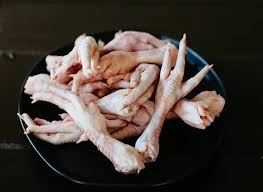
Global Studies and Research Findings on the International Chicken Feet Export Market
Overview
In recent years, chicken feet have emerged as a major traded poultry by-product in global markets — especially in China, Southeast Asia, the Middle East, and Africa.
Scientific and economic studies from 2024–2025 provide new insights into market trends, processing quality, value-added production, and export logistics.
Below is a summary of the most recent international studies and their findings.
Study 1 — Economic Factors Driving Brazil’s Chicken Feet Exports to China (2025)
Source: Economic Determinants of Brazil’s Chicken Feet Exports to China, Journal of Economic Studies (2025).
Method: Vector Error Correction Model (VECM).
Findings:
-
China’s income growth has a significant positive effect on Brazil’s chicken feet exports.
-
Export price also positively influences trade volume.
-
The exchange rate (BRL/USD) was found to be statistically insignificant.
Key Insight:
Markets with strong purchasing power and competitive export prices — such as China — are crucial for growth in chicken feet exports.
Study 2 — China’s Import Market for Chicken Feet
Source: Market research report (Scribd, CFR, 2024).
Findings:
-
China remains the world’s largest importer of chicken feet.
-
The United States previously exported over 300,000 tons of chicken feet annually to China.
-
Imports are affected by sanitary restrictions and trade barriers (e.g., avian influenza bans).
Key Insight:
Understanding market regulations, sanitary controls, and trade policies is essential for successful export strategies.
Study 3 — Microbiological Quality in Chicken Feet Processing (Brazil, 2024)
Source: Journal of Poultry Science, Elsevier/ScienceDirect.
Focus: Bacteriological quality at four stages of chicken feet processing.
Findings:
Microbial contamination risks are highest before disinfection and drop significantly after proper washing, sanitizing, and freezing.
Key Insight:
Maintaining strict control during washing, disinfection, freezing, and packaging ensures export-grade product safety.
Study 4 — Gelatin Extraction from Chicken Feet of Different Ages (Saudi Arabia, 2025)
Source: Frontiers in Sustainable Food Systems (2025).
Objective: Extraction and physicochemical analysis of gelatin from chicken feet at different bird ages.
Findings:
-
The highest gelatin yield came from 16-week-old chickens.
-
Gelatin from younger birds showed better clarity and texture properties.
Key Insight:
Value-added processing — such as gelatin extraction — transforms waste into high-value export materials, enhancing profitability and sustainability.
Study 5 — “Chicken Feet Trade: Opportunities and Challenges” (Global, 2025)
Source: Ekesht Global Trade Report (2025).
Findings:
-
Opportunities: Growing demand in Asian markets, increasing use in food and collagen industries.
-
Challenges: Sanitary standards, cold-chain logistics, packaging requirements, and complex import regulations.
Key Insight:
Export success requires integrated management of production, processing, packaging, logistics, and compliance — not just raw material export.
Cross-Study Analysis
-
Market Demand is the Core Driver


All research emphasizes that income level and consumer demand in importing countries — especially China — determine export success.
-
Competitive Pricing & Product Differentiation
Price competitiveness and consistent quality remain decisive factors in global trade performance.
-
Quality Control & Processing Innovation
Microbiological control, rapid freezing (IQF), and hygienic packaging are key to meeting international standards.
-
Value-Added Products Create New Opportunities
By transforming chicken feet into gelatin, collagen, or processed snacks, exporters can expand into new market segments.
-
Regulatory & Sanitary Compliance
Strict adherence to sanitary certificates, cold-chain standards, and EU/Asia import regulations is essential to reduce rejection risk and enhance credibility.
Practical Recommendations for Exporters

-
Conduct in-depth market analysis — study demand, price trends, and import restrictions of each destination country.
-
Lower production costs while maintaining or improving product quality.
-
Expand beyond raw exports — consider producing value-added products like gelatin or processed frozen portions.
-
Upgrade processing hygiene and packaging standards to align with HACCP and ISO systems.
-
Integrate advanced logistics and traceability technologies (cold chain, IoT tracking) to guarantee product integrity.
Summary Global studies confirm strong and growing demand for chicken feet in Asian markets.
-
Economic and microbiological research highlights that quality, traceability, and added value define export success.
-
For Iranian or emerging exporters, adopting modern processing, cold-chain logistics, and compliance strategies is key to entering premium markets like the EU and China.

بدون دیدگاه