
Export of Kilka Fish from Iran

Abstract
Kilka fish is one of the most valuable aquatic species in the Caspian Sea, which, due to its high protein content and reasonable price, has significant export potential. This article provides a comprehensive review of the status of Kilka fish exports from Iran, target markets, upcoming challenges, and strategies for developing this industry.
Introduction
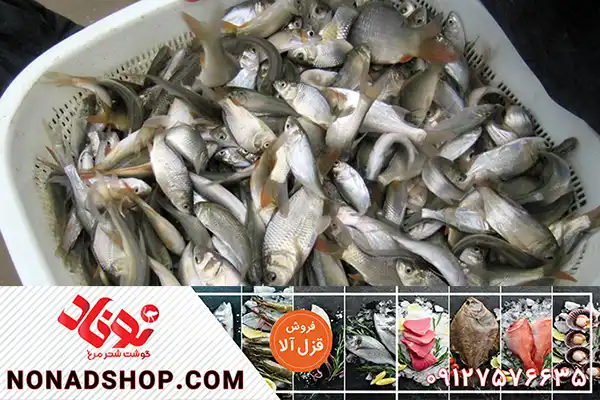
Kilka fish is one of the valuable aquatic species in the Caspian Sea, mainly caught off the coasts of Mazandaran and Gilan provinces. Despite its high nutritional value, this small fish has unfortunately not found a proper place in the food basket of Iranian households, and over 90% of it is used for producing fishmeal. However, the export capacities of this product to neighboring and regional countries paint a bright outlook for the development of Iran’s fisheries industry.
Kilka Catch Statistics in Iran
According to the latest published statistics, the amount of Kilka fish caught in the Iranian waters of the Caspian Sea in recent years has fluctuated between 20,000 and 23,000 tons. In the Iranian year 1399 (2020-2021), approximately 20,053 tons of Kilka fish were caught, with Mazandaran province’s share being 71% and Gilan province’s share being 29%.
More up-to-date statistics show that in the 1404 (2025-2026) fishing season, the amount of Kilka catch reached 20,360 tons, marking a 12% growth compared to the previous year. This increase indicates the relative dynamism of this industry despite existing challenges.
Export Target Markets
Turkmenistan; The Primary Destination
Turkmenistan is considered the most important target market for Iran’s Kilka fish exports. Due to its familiarity with Kilka’s nutritional value and its place in the people’s food basket, this country annually imports significant amounts of this product from Iran. Exports to Turkmenistan are mainly carried out via land transit.
Russia; A Market with High Potential
Russia, as one of the Caspian Sea littoral states, is a very suitable market for exporting Iranian Kilka. Kilka fishing cooperative companies in Gilan and Mazandaran provinces have recently begun planning for exports to this country. Exports to Russia require appropriate packaging or processing of the product in a way that appeals to Russian consumers.
Other Markets
In addition to Turkmenistan and Russia, other countries such as Armenia, Azerbaijan, Pakistan, and Afghanistan are also among the buyers of Iranian Kilka fish. Furthermore, processed Kilka products, such as dried fish, are also exported to Sri Lanka, Vietnam, South Korea, the UAE, China, Qatar, and Oman.
Challenges of Kilka Exports
Lack of Domestic Consumption and Insufficient Cultural Awareness
One of the most important challenges of the Kilka industry in Iran is the public’s lack of interest in consuming this fish for human consumption, despite its high nutritional value. This is while in other countries like Turkmenistan and Turkey, Kilka holds a special place in the people’s diet.
Stock Depletion and Fishing Challenges
The introduction of the invasive ctenophore (Mnemiopsis leidyi) into the Caspian Sea since 2000 has caused serious damage to Kilka stocks. Before this event, the predominant catch was of the anchovy kilka, but now over 90% of the catch is of the common kilka species. Additionally, catching this fish is dependent on weather conditions, and in unfavorable years, a significant decrease in catch occurs.
Currency Issues and Market Fluctuations
The purchasing countries of Iranian Kilka are sometimes unable to buy the product due to problems in securing US dollars. This issue has caused fluctuations in exports, especially in recent years.
Need for Proper Processing and Packaging
Exporting Kilka in raw form has low added value. The head of the Kilka Fishermen’s Union of Mazandaran province emphasizes that if exported Kilka undergoes processing, it will have greater economic returns. Products such as smoked Kilka, Kilka fish sauce, and pickled Kilka are among the producible products.
Nutritional Value and Competitive Advantages
In terms of nutritional value, Kilka fish is on par with valuable fish such as sturgeon (caviar), mullet, and trout, and in terms of protein, it is even more valuable than red meat. The protein absorption rate of this fish in the human body is 80-90%. Also, since Kilka is caught at depths exceeding 40 meters, it possesses greater nutritional properties compared to other aquatic species.
The low price of this fish compared to other protein sources is a significant competitive advantage for exports. A bag of chips can sometimes be more expensive than a kilogram of Kilka fish, while 500 grams of this fish can provide a meal for a family of four.
Processing and Packaging; The Key to Export Success
To succeed in international markets, attention to proper processing and packaging is essential. Successful companies in this field, by obtaining international certifications such as ISO 9001, HACCP, HALAL, and EC, have managed to enter the Eurasian markets and neighboring countries.
Products that can be produced from Kilka include:
-
Frozen Kilka: Suitable for export in raw form
-
Smoked Kilka: With higher added value
-
Kilka Fish Sauce: A popular product in some markets
-
Fishmeal: With higher quality than imported samples
-
Canned Kilka: With long shelf life
Transportation and Storage Methods

To maintain the quality of Kilka fish during export, the use of refrigerated containers with a positive temperature of 7 to 10 degrees Celsius is recommended. The useful life of the product under these conditions is about 6 months. Each refrigerated container can carry approximately 1,400 cartons of 20 kg each.
Conclusion and Future Outlook
Despite numerous challenges, the export of Kilka fish from Iran has high potential for growth and development. The most important strategies for developing the export of this product are:
-
Development of processing industries to increase added value
-
Improving packaging tailored to the tastes of target markets
-
Cultural awareness for domestic consumption and reducing dependence on the fishmeal market
-
Obtaining international certifications to facilitate entry into new markets
-
Government support for fishermen and processing companies
Given the 12% growth in catch in 1404 (2025-2026) and the increasing attention to new markets such as Russia, it can be hoped that Iran’s Kilka export industry will flourish more in the coming years. Achieving this requires the cooperation of the Iran Fisheries Organization, the private sector, and knowledge-based companies to upgrade fishing, processing, and packaging technologies.




بدون دیدگاه