
Chicken Feet Trade and Exports Related to India — Comprehensive Report (Updated to Mid-2025)
Abstract
The global chicken feet market in recent years has been shaped by fluctuating supply (due to avian influenza outbreaks), increasing demand from collagen/gelatin industries, and shifting trade routes.
India — while a regional poultry producer and exporter — also plays a variable role as both an importer (for niche markets and re-export) and a growing consumer of value-added chicken feet products.

— India’s Market Overview: Imports, Exports, and Domestic Demand
-
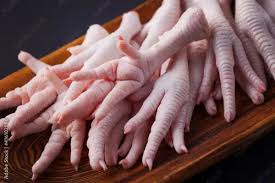
Trade data indicates that India acts both as an exporter and an importer of chicken feet. Indian exports have been recorded toward Southeast Asia, the Middle East, and Hong Kong, although export volumes remain modest compared with leading global suppliers.
(Example: Volza reports Indian shipments to Vietnam, Malaysia, and Hong Kong.)
-
Meanwhile, domestic demand in India — for local consumption, the food industry, and collagen processing — continues to expand. Indian companies listed on trade directories actively market cleaned or frozen chicken feet for both domestic sales and export contracts.
— Global Supply Routes and India’s Position
-
The global supply chain remains dominated by Brazil, Thailand, Russia, and several South American producers.
Disruptions such as avian influenza outbreaks or export-policy changes have periodically affected availability and prices, prompting importers (including Indian buyers) to seek alternative sources.
-
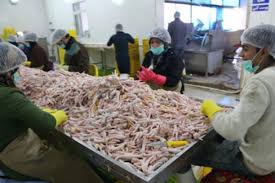
At the same time, India has sufficient processing capacity to serve regional demand, and Indian suppliers listed on TradeIndia and ExportersIndia advertise cleaned/frozen chicken feet ready for export.
— Trade Data and Pricing (Summary)
-
According to Volza and related databases, India’s chicken-feet export shipments increased modestly during the last 12 months, though still far below global leaders such as Brazil and Thailand.
-
Pricing portals like Tridge track export/import values and CIF/CFR rates — useful for exporters drafting contracts or negotiating freight terms.
Emerging Opportunities for Indian Exporters
-
Regional Re-export Hubs:
Indian firms can leverage the country’s port infrastructure and low labor costs to serve as re-export centers for neighboring markets in Southeast Asia and the Middle East.
-
Collagen and Gelatin Industries:
Industrial use of chicken feet for collagen and gelatin extraction — especially in halal, pharmaceutical, and nutraceutical sectors — offers high value-added potential. Scientific reports emphasize the efficiency of collagen extraction from poultry feet.
-
Halal and Niche Food Segments:
Demand for halal-certified, ready-to-cook frozen chicken feet is growing among Muslim markets in Asia and the Middle East; major global exporters are investing heavily in halal certification.
— Key Risks and Challenges
-
Avian Influenza (HPAI):
Disease outbreaks remain the largest risk factor. Temporary trade suspensions and regional bans continue to affect exporters worldwide, including large suppliers such as Brazil.
-
Competition and Cost Pressure:
Indian producers face strong competition from countries with larger industrial scale and lower production costs (notably Brazil and Thailand). Building comparative advantages in price, quality, halal compliance, and delivery speed is essential.
-
Regulatory Compliance:
Exporters must navigate complex health, packaging, and certification requirements, including veterinary registration of plants and adherence to import-country sanitary standards.

Practical Strategies and Recommendations
-
Invest in Processing and Value Addition:
Develop modern lines for cleaning, sorting, freezing, and vacuum packaging to supply ready-to-export chicken feet. This improves shelf life and profitability.
-
Diversify Markets and B2B Outreach:
Target not only direct buyers but also industrial clients — gelatin producers, food processors, and distributors — through online B2B platforms and trade fairs.
-
Include Risk-Mitigation Clauses:
Contracts should contain insurance coverage and protection against sudden bans or disease-related disruptions.
-
Monitor Pricing and Data Sources:
Use Tridge, Volza, and UN Comtrade databases to benchmark export prices, plan logistics, and forecast market movements.
— 12-to-18 Month Outlook
The short-term outlook for chicken-feet trade involving India remains complex but opportunity-driven.
If supply disruptions continue among top exporters (e.g., Brazil, Thailand, Russia), regional importers may increase sourcing from India. Conversely, if global supply stabilizes, competition for smaller exporters will intensify.

NONADSHOP
Trade company we can export to all section of world
India.china.euro and other countries
For helping and support business man in all the world call us…

)
بدون دیدگاه