
Investigation of Comparative Advantage and Prioritization of Target Markets for Iranian Caviar Exports

Abstract
Iranian caviar, recognized as one of the highest-quality fishery products in the world, holds a special position in international trade. This article examines the comparative advantage of Iranian caviar exports and prioritizes its target markets. Research conducted using the Revealed Comparative Advantage (RCA) index demonstrates that Iran has maintained a comparative advantage in caviar exports throughout all studied years . Iran’s caviar export value has increased from $3.2 million in 2023 to approximately $8 million in the year ending March 2026, with target markets expanding to 42 countries worldwide . Based on Riddle and Numerical Taxonomy ranking methods, Japan, South Korea, Oman, France, Norway, Sweden, Germany, the United Kingdom, and Cyprus have been identified as the best target markets . The United Arab Emirates, Qatar, and Belgium have been the three main importing countries of Iranian caviar in recent years . Despite comparative advantage and production growth, Iran’s share of the global caviar market is approximately 14%, ranking 14th worldwide, while China holds the top position with a 30% market share . This article provides practical guidance for Iranian exporters and fisheries policymakers by presenting a prioritization of target markets.

1. Introduction
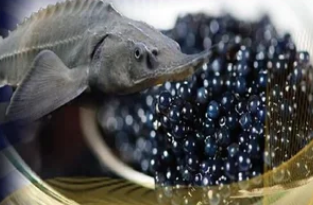
Iranian caviar, particularly the Beluga (Huso huso) species, is globally recognized as the finest and highest-quality caviar in the world, valued between $700 and $1,000 per kilogram in international markets . Iran ranks as the world’s second-largest producer of Beluga caviar after Russia . Due to the ban on sturgeon fishing in the Caspian Sea, Iran’s caviar industry has fully transitioned to aquaculture, with the number of sturgeon farming farms increasing from 16 farms in 2012 to 195 farms in 2022 .
Identifying comparative advantage and prioritizing export target markets is of strategic importance for developing Iran’s non-oil exports. This article aims to examine the comparative advantage of Iranian caviar exports and provide a prioritization of target markets based on economic and trade indicators, thereby drawing a practical roadmap for industry stakeholders.


2. Theoretical Framework and Methodology
2-1. Revealed Comparative Advantage (RCA) Index
The Revealed Comparative Advantage (RCA) index is one of the most widely used tools for measuring countries’ competitive advantage in exporting specific goods. This index represents the ratio of a specific commodity’s share in a country’s total exports to that commodity’s share in total global exports. If the value of this index is greater than one, the country is considered to have a comparative advantage in exporting that commodity.
Research in Iran’s economic domain indicates that the pattern of export comparative advantage indices across economic subsectors has not followed a consistent trend during different periods, and consistency tests indicate that ordinal interpretation of RCA indices yields greater satisfaction in formulating economic policies.
2-2. Target Market Ranking Methods
To prioritize export target markets, researchers have employed various methods including the Riddle process and Numerical Taxonomy. The indicators used in these methods include:
1. Average import value of caviar by the importing country
2. Ratio of caviar import value to total world caviar imports
3. Ratio of caviar import value to total import value of the importing country
4. Import preference index
5. Coefficient of variation of caviar import value
6. Increase in demand for caviar import value
3. Comparative Advantage of Iranian Caviar Exports
3-1. Confirmation of Comparative Advantage
Research conducted using the Revealed Comparative Advantage (RCA) index for the period 2000-2005 demonstrates that Iran maintained a comparative advantage in caviar exports throughout all studied years. This comparative advantage stems from multiple factors:
⦁ Superior product quality: Iranian caviar, particularly the Beluga species, is recognized as unparalleled in quality worldwide
⦁ Historical experience and expertise: Iran has a long history of caviar production and export, with former Soviet experts in the 1920s laying the foundation for Iran’s caviar industry
⦁ Aquaculture development: Following the fishing ban in the Caspian Sea, Iran has made extensive investments in sturgeon farming, increasing the number of farms from 16 to 195
⦁ Long production cycle: Although the caviar production cycle takes approximately 10 years, investments made in recent years have gradually come to fruition, with production increasing exponentially
⦁
3-3. Iran’s Position in the Global Market
Despite comparative advantage and superior quality, Iran’s share of the global caviar market is approximately 14%, ranking 14th worldwide. In contrast, China holds the top position with a 30% global market share, followed by producers from Eastern Europe, Europe, and America. Iran supplies 45% of global caviar production.
4. Prioritization of Target Markets
4-1. Results of Riddle and Numerical Taxonomy Methods
Research conducted on ranking Iranian caviar export target markets using Riddle and Numerical Taxonomy methods yielded the following results:
Riddle Process:
1. Japan
2. South Korea
3. Oman
4. France
5. Norway
Numerical Taxonomy:
1. Sweden
2. Germany
3. South Korea
4. United Kingdom
5. Cyprus
4-2. Current Target Markets
Based on recent statistics, the most important export destinations for Iranian caviar are:
Rank Country Share of Exports (Recent Period)
1 United Arab Emirates 32% (416 kg in first half of 2021)
2 Qatar –
3 Belgium –
4 United Kingdom 220 kg (first half of 2021)
5 Other countries (Japan, Kuwait, Portugal, Spain) –
Source:
Europe remains the largest target region for Iranian caviar, with the United Arab Emirates, other Arab countries, parts of Asia, and Africa also being important markets. In 2022, approximately 36% of Iran’s caviar exports were conducted through luggage trade, indicating efforts to circumvent export restrictions.
4-3. Proposed Prioritization Based on Latest Data
By combining the results of scientific ranking methods and updated data, the following prioritization of target markets for Iranian caviar exports is proposed:
Golden Markets (First Priority):
⦁ United Arab Emirates: Largest current market with 32% share and role as a redistribution hub
⦁ Japan: Highest score in the Riddle method and high demand for premium caviar
Strategic Markets (Second Priority):
⦁ South Korea: Present in both ranking methods with high scores
⦁ Germany and the United Kingdom: Large European markets with stable demand
⦁ France: Traditional caviar market with high acceptance
Emerging Markets (Third Priority):
⦁ Russia: Despite no imports from Iran in recent years, has high potential
⦁ Turkey: Neighboring market with significant growth
⦁ Southeast Asian countries: Singapore, Malaysia, Thailand, Vietnam

5. Challenges in Target Markets
5-1. Logistical Challenges
Caviar, as a perishable and high-value product, is primarily exported via air freight. The suspension of international flights in February 2026 reduced Iran’s caviar exports to zero, demonstrating the industry’s vulnerability to logistical shocks. Although exporters managed to partially normalize the situation by rerouting through neighboring countries and then re-exporting via third-country airlines, this experience revealed the necessity of diversifying transport routes.
5-2. Increasing Competition
China, with a 30% share of the global caviar market, is Iran’s main competitor. Additionally, Russia, Azerbaijan, and Kazakhstan are also developing their caviar industries and pose serious competitive threats to Iran. The problem of counterfeit products (especially Chinese caviar marketed under Russian brands) has also affected consumer confidence in Caspian caviar.
5-3. Sanctions-Related Restrictions
International sanctions have limited Iran’s access to European markets and increased transaction costs. However, Iranian exporters have managed to partially circumvent these restrictions by using indirect routes (such as exporting to the UAE and then re-exporting).

7. Conclusion
Investigation of comparative advantage and prioritization of target markets for Iranian caviar exports reveals that this product, possessing a revealed comparative advantage in all studied years, has high potential for developing Iran’s non-oil exports. Iranian caviar, particularly the Beluga species, is unparalleled in quality worldwide, valued between $700 and $1,000 per kilogram in international markets.
Based on Riddle and Numerical Taxonomy ranking methods, Japan, South Korea, Oman, France, Norway, Sweden, Germany, the United Kingdom, and Cyprus have been identified as the best target markets. Meanwhile, the United Arab Emirates, Qatar, and Belgium have been the three main importing countries of Iranian caviar in recent years.
Despite comparative advantage and production growth (17% production increase and 14% export volume increase), Iran’s share of the global caviar market is approximately 14%, ranking 14th worldwide, while China holds the top position with a 30% market share. Diversification of target markets, branding development, logistics management, and production sustainability are the key keys to improving Iran’s position in the global caviar market.
For more info call us
Nonadshop.com

بدون دیدگاه