
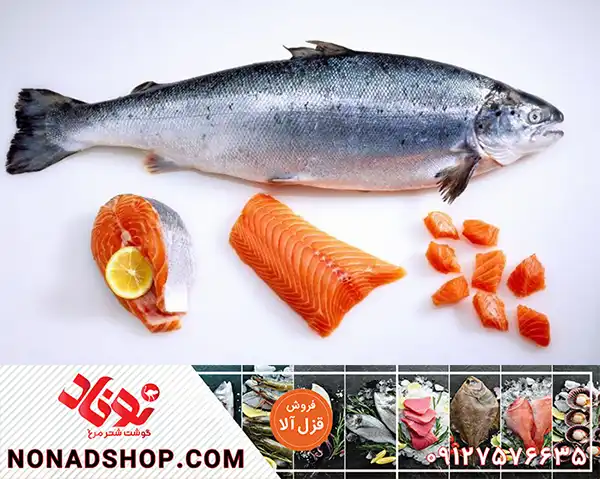
Identification and Prioritization of Advantages and Risks in Sturgeon Reproduction and Farming (Case Study: Farms on the Caspian Sea Coast)

Abstract
Sturgeon aquaculture in Iran’s northern provinces—Guilan, Mazandaran, and Golestan—holds significant economic and ecological importance, given the country’s historical position as a major caviar producer. This article identifies and prioritizes the benefits and risks associated with sturgeon reproduction and farming based on comprehensive research conducted in the region. Using the Analytical Hierarchy Process (AHP), studies have revealed that the most important advantages are maintaining sturgeon stocks and favorable profitability, while the most critical risks are the lack of expert workforce and sturgeon diseases . Secondary advantages include knowledge development and production, while secondary risks involve illegal fishing, insufficient target markets, and inadequate insurance support. The article provides a structured framework for risk management and strategic decision-making for sturgeon farm operators along the Caspian coast.
1. Introduction: The Strategic Importance of Sturgeon Aquaculture in Northern Iran
Iran is recognized as one of the world’s primary caviar producers, with the northern provinces of Guilan, Mazandaran, and Golestan serving as the focal points for sturgeon aquaculture . The Caspian Sea historically contributed over 90% of global caviar supply, making sturgeon resources of paramount importance to the region’s economy and cultural heritage .
Sturgeon farming in Iran has undergone rapid development. In 2009, there was no commercial sturgeon culture in the country, with only 20 tons of meat produced. By 2016, Iran had 45 active sturgeon farms, capable of producing 3,400 tons of meat and over 16 tons of caviar . National development plans aim to increase meat production to 10,000 tons and caviar production to 100 tons by 2025 .
The aquaculture sector in Iran’s northern provinces has been evaluated through strategic management frameworks. SWOT analysis using both traditional and quantitative matrix methods has confirmed that aquaculture in these provinces is “extremely approved and acceptable,” with the score of strengths exceeding weaknesses and opportunities exceeding threats .

2. Research Methodology for Identifying Benefits and Risks
2-1. Study Approach
Research conducted to identify and prioritize benefits and risks in Iran’s sturgeon aquaculture industry employed a descriptive survey methodology. A questionnaire covering economic and ecological aspects of sturgeon farming was designed and distributed to an expert team comprising economists, statisticians, and aquaculturists .
2-2. Analytical Framework
Given the pluralistic nature of the evaluation criteria, the Analytical Hierarchy Process (AHP) was utilized to rank benefits and risks systematically . A proposed hierarchical structure was developed, categorizing benefits and risks into relevant groups to facilitate prioritization.
Additional studies have employed:
⦁ SWOT Analysis: To assess internal strengths/weaknesses and external opportunities/threats for sturgeon fisheries and aquaculture
⦁ Quantitative Strategic Planning Matrix (QSPM): For priority setting of strategies
⦁ GIS-Based Mathematical Matrices: To evaluate environmental impacts and identify optimal farming locations
2-3. Reliability and Validity
Studies assessing sturgeon stock restoration using SWOT methodology have demonstrated high reliability, with Cronbach’s alpha coefficients of 0.94 for overall reliability and individual scores of 0.89 for strengths, 0.83 for weaknesses, 0.92 for opportunities, and 0.88 for threats .
3. Identification and Prioritization of Benefits
3-1. Primary Benefits (Highest Priority)
Maintaining Sturgeon Stocks
Research utilizing AHP methodology has identified “maintaining sturgeon” as the highest-ranked benefit of sturgeon farming in the Caspian region . This reflects the critical role of aquaculture in conservation, as wild sturgeon populations have declined dramatically due to overfishing, habitat destruction, and environmental degradation .
The International Union for Conservation of Nature (IUCN) has officially declared all sturgeon species as threatened with extinction . Iran has undertaken a progressive stock enhancement program since 1983, releasing 3.46 million sturgeon juveniles in 1992 and 24.5 million in 1998 . The contribution of stocked fish to sturgeon fisheries is substantial: 90% for beluga, 60% for ossetra, and 50% for sevruga, with stocking constituting 100% of Persian sturgeon recruitment .
Favorable Profitability
Profitability has been identified as the second most significant benefit of sturgeon farming . The economic value derives from:
⦁ High market prices for sturgeon meat ($10-12 USD/kg for whole fish in 2016)
⦁ Premium caviar prices ($1,000-1,500 USD/kg for beluga caviar)
⦁ 90-95% of farmed caviar exported to international markets
Additional Benefits
Secondary benefits identified include:
⦁ Employment creation in deprived coastal areas
⦁ Social and economic values (high nutritional value of caviar and meat, marketability)
⦁ Government investment in stock restoration
⦁ Existence of specialized reproduction and rearing complexes

4. Identification and Prioritization of Risks
4-1. Primary Risks (Highest Priority)
Lack of Expert Workforce
The shortage of trained experts has been identified as the highest-ranked risk facing sturgeon farming in the Caspian region . This reflects broader capacity constraints, including:
⦁ Limited number of qualified aquaculturists and veterinarians
⦁ Inadequate training programs for emerging technologies
⦁ Brain drain from coastal regions
The annual release of fingerling sturgeons into the sea—while important—has been identified as a relatively lower priority among strengths, receiving an average score of only 4.8 out of 10 in one study, suggesting that technical human resources may be underutilized .
Sturgeon Diseases
Disease outbreaks constitute the second most critical risk . Key disease-related challenges include:
⦁ Bacterial and parasitic infections affecting hatchery and farm operations
⦁ Anomalies in early ontogenesis identified during artificial reproduction, classified into nine classes of deformities, organ defects, edema, hematomas, and other abnormalities
⦁ Reduced survival rates and economic losses
Assessment of sturgeon anomalies during artificial reproduction enables prediction of mortality rates and calculation of the real value of stock replenishment .
4-2. Secondary Risks
Illegal Fishing
Illegal and indiscriminate fishing, driven by socio-economic problems in coastal areas, has been identified as a significant threat . The collapse of the former Soviet Union negatively impacted economic and social conditions in the newly independent republics, leading to increased illegal fishing pressure on sturgeon stocks .
Environmental Degradation
Environmental factors constitute a critical risk category, with pollution identified as the most significant weakness in sturgeon stock restoration processes:
⦁ Industrial, oil, urban, and agricultural pollutants entering spawning habitats (highest-ranked weakness, with average score of 12.5/15)
⦁ Dam construction obstructing migration routes to spawning grounds
⦁ Destruction of natural spawning areas
⦁ Changes in food resources in spawning areas
Inadequate Management and Investment
Structural weaknesses include:
⦁ Absence of a long-term sustainable exploitation strategy
⦁ Insufficient investment in the sturgeon sub-sector
⦁ Lack of coordinated management among the five Caspian border countries (Russia, Iran, Kazakhstan, Azerbaijan, Turkmenistan)
⦁ Inadequate policy-making


5. Secondary Factors
5-1. Lower-Ranking Benefits
Research has identified several benefits with relatively lower priority :
⦁ Annual release of fingerling sturgeons: Lower priority compared to biological values
⦁ Availability of sturgeon breeders for reproduction
⦁ Opportunities for cooperation with research and academic institutions
5-2. Lower-Ranking Risks
The lowest-ranked risks include :
⦁ Shortage of target markets
⦁ Inadequate insurance support

6. SWOT Analysis Summary
Studies assessing sturgeon stock restoration using SWOT methodology have identified comprehensive internal and external factors:
Strengths (Highest Priority) :
1. Biological values: Presence of five indigenous species, collection and production of fingerling fish (Avg: 6.5)
2. Social/economic values: Caviar value, marketability, high nutritional value (Avg: 6.4)
3. Technical expertise: Understanding of artificial reproduction techniques (Avg: 6.25)
Weaknesses (Highest Priority) :
1. Environmental destruction: Pollution entering spawning habitats (Avg: 12.5)
2. Illegal fishing: Pressure from coastal socio-economic problems (Avg: 12.2)
3. Strategic gaps: Absence of long-term sustainable exploitation strategy (Avg: 12.0)
Key Opportunities :
⦁ Government support for aquaculture development
⦁ Research center presence (International Sturgeon Research Institute, fisheries research centers)
⦁ Favorable conditions for aquaculture expansion
Key Threats :
⦁ Overfishing and illegal fishing
⦁ Habitat destruction from dams and pollution
⦁ Lack of effective management and sustainable exploitation

7. Strategic Recommendations for Sturgeon Farmers
Based on the identified benefits and risks, the following strategic recommendations are proposed:
Step One: Address the Expert Workforce Gap
⦁ Partner with universities (University of Guilan, Gorgan University, International Sturgeon Research Institute)
⦁ Implement training programs for hatchery and farm staff
⦁ Engage experienced foreign technicians for knowledge transfer
Step Two: Enhance Disease Management
⦁ Implement regular health monitoring programs
⦁ Utilize probiotic supplementation as developed by Iranian research institutions
⦁ Assess anomalies during early ontogenesis for quality control
⦁ Develop biosecurity protocols for hatchery operations
Step Three: Strengthen Market Development
⦁ Focus on both domestic and international markets
⦁ Develop branding strategies for Iranian caviar and sturgeon meat
⦁ Consider market diversification beyond traditional European buyers
Step Four: Implement Environmental Management
⦁ Use GIS tools for site selection and environmental impact assessment
⦁ Maintain water quality monitoring programs
⦁ Adopt sustainable farming practices
Step Five: Pursue Strategic Management Approaches
⦁ Apply SWOT and QSPM frameworks for strategic planning
⦁ Develop long-term sustainable exploitation strategies
⦁ Collaborate with government research institutes (IFRO, AREEO)

8. Conclusion
Iran’s sturgeon aquaculture industry, centered on the Caspian Sea coast in Guilan, Mazandaran, and Golestan provinces, offers significant economic and ecological benefits. Research utilizing AHP methodology has identified the most important benefits as maintaining sturgeon stocks and favorable profitability, while the most critical risks are the lack of experts and sturgeon diseases .
Secondary advantages include knowledge production and development, while secondary risks encompass illegal fishing, insufficient target markets, and inadequate insurance support. SWOT analyses confirm that aquaculture in Iran’s northern provinces has strengths that outweigh weaknesses and opportunities that exceed threats, indicating the sector is viable and has strong development potential .
For successful management, sturgeon farm operators must prioritize investment in human capital development, disease prevention and management, market development, and environmental protection. Strategic management approaches, collaborative research, and government support will be essential for realizing the full potential of Iran’s sturgeon aquaculture industry—targeting 10,000 tons of meat and 100 tons of caviar annually .
For more information in export beluga fish call us in
Nonadshop.com

)
بدون دیدگاه