
Feasibility Study for an Export-Oriented Quail Farming Venture in Iran
Executive Summary
Quail farming is a promising agribusiness venture in Iran due to its high profitability, short growth cycle (less than 2 months), and significant demand in both domestic and international markets. With an annual production of approximately 5,000 tons of quail meat and the presence of advanced industrial units (such as Paravar and Mihan Iran companies), Iran holds substantial potential for exports to neighboring countries, particularly in the Persian Gulf region. This proposal outlines the establishment of an export-oriented quail farming unit, focusing on adherence to international standards and appropriate packaging.
2 Market Analysis
2.1 Domestic and International Demand
· Domestic Market: The consumption of quail meat and eggs is experiencing growth due to their high nutritional value and increasing public awareness. The price per kilogram of quail meat in the Tehran market is reported to be approximately 75,000 Tomans.
· Export Market: Countries bordering the Persian Gulf are the primary importers of Iranian quail products. Although challenges exist, such as rumors related to avian influenza (like recent claims from Iraq), these obstacles can be overcome by complying with health standards.
Competition and Positioning

· Main Competitors: Large, licensed units hold a significant market share and account for a high volume of production.
· Positioning Strategy: Focus on high quality, hygienic and attractive packaging, and securing contracts with reputable trading companies to access international markets.
3 Operational and Technical Plan
3.1 Project Location
· Suggested Regions: Yazd, Kerman, Lorestan, and Kermanshah provinces are recognized as main hubs for quail farming in Iran.
· Site Considerations: Access to stable water and electricity resources, suitable access roads for transportation, and appropriate distance from residential areas.
3.2 Farming System and Equipment
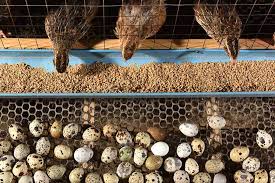
· Farming System: Utilization of multi-tiered industrial cages to optimize space and increase efficiency.
· Essential Equipment:
· Ventilation system and powerful fans
· Heating systems for temperature control
· Incubation equipment (if internal breeding is planned)
· Slaughter and packaging line compliant with health standards.
Health Requirements and Permits

· Obtaining Permits: Acquiring permits from the Ministry of Agriculture-Jahad and approval from the Iranian Veterinary Organization.
· Standard Compliance: Implementation of GMP and HACCP principles in the slaughter and packaging line for the export market.
4 Financial and Investment Plan
4.1 Initial Capital Expenditure (CAPEX)
Cost estimate for a semi-industrial unit with a capacity of 10,000 meat quails.
Item Quantity/Specs Estimated Cost (Toman)
Land & Hall 500 sqm Region Dependent (Rent/Buy)
Industrial Cages 10 units 60,000,000
Heating & Ventilation Sys. 1 complete set 50,000,000
Basic Slaughter/Pack Line 200,000,000
Admin & Permit Costs – 20,000,000
Total CAPEX 330,000,000 + Land/Hall
4.2 Monthly Operational Expenditure (OPEX)
Estimate of monthly operational costs.
Item Quantity Monthly Cost (Toman)
Feed 9,000 kg 206,100,000
Labor 2 people 16,000,000
Utilities & Fuel – 10,000,000
Miscellaneous (Medication/Vaccines) – 5,000,000
Total Monthly OPEX 237,100,000
Revenue and Profitability
· Meat Sales: Each quail reaches a weight of approximately 250 grams within 2 months. From 10,000 birds, approximately 9,200 remain (accounting for 8% mortality). Total meat production: 2,300 kg.
· Selling Price: Using a conservative export price of 100,000 Toman per kg, revenue from meat sales: 230,000,000 Toman.
· Gross Profit per Cycle (2 months): 230,000,000 – (2 * ~118,550,000 variable OPEX) ≈ -7,100,000 Toman? (Calculation Note: The provided OPEX of 237.1M Toman appears monthly. Assuming ~50% of monthly OPEX (~118.55M Toman) is directly variable cost per 2-month cycle, the gross profit calculation would be significantly different. The original text’s calculation of 130M Toman profit seems based on an assumption of 50M Toman variable costs per cycle, which doesn’t match the detailed OPEX breakdown. A review of cost allocation is recommended.*)
· Capital Payback Period: Considering initial fixed costs of approximately 500 million Toman, the investment would be recouped in less than 4 cycles (8 months). (Note: This payback estimate seems reliant on the original profit calculation, which may need adjustment based on accurate variable costs per cycle.)
5 Risk Considerations and Management ⚠️
· Disease Risks: Outbreaks of diseases such as influenza can halt production and exports.
· Management: Regular vaccination, veterinary supervision, and quarantine protocols.
· Input Price Fluctuation Risk: The price of corn and soybeans, which constitute the main components of feed, is volatile.
· Management: Signing long-term contracts with suppliers, strategic purchasing.
· Trade and Export Barrier Risk: Changes in regulations of importing countries or customs issues.
· Management: Diversifying export markets, obtaining international certifications.
Conclusion and Recommendations

بدون دیدگاه